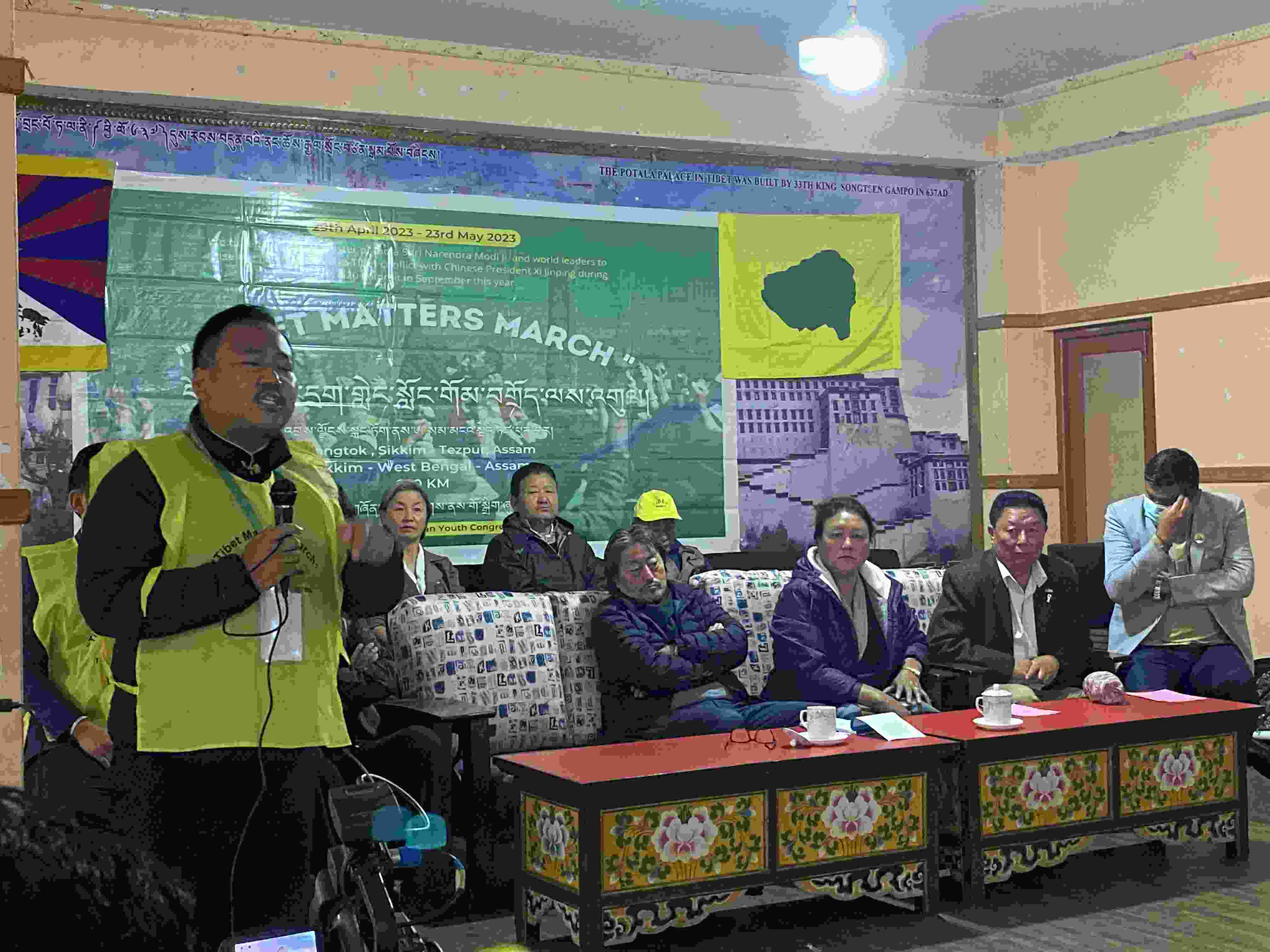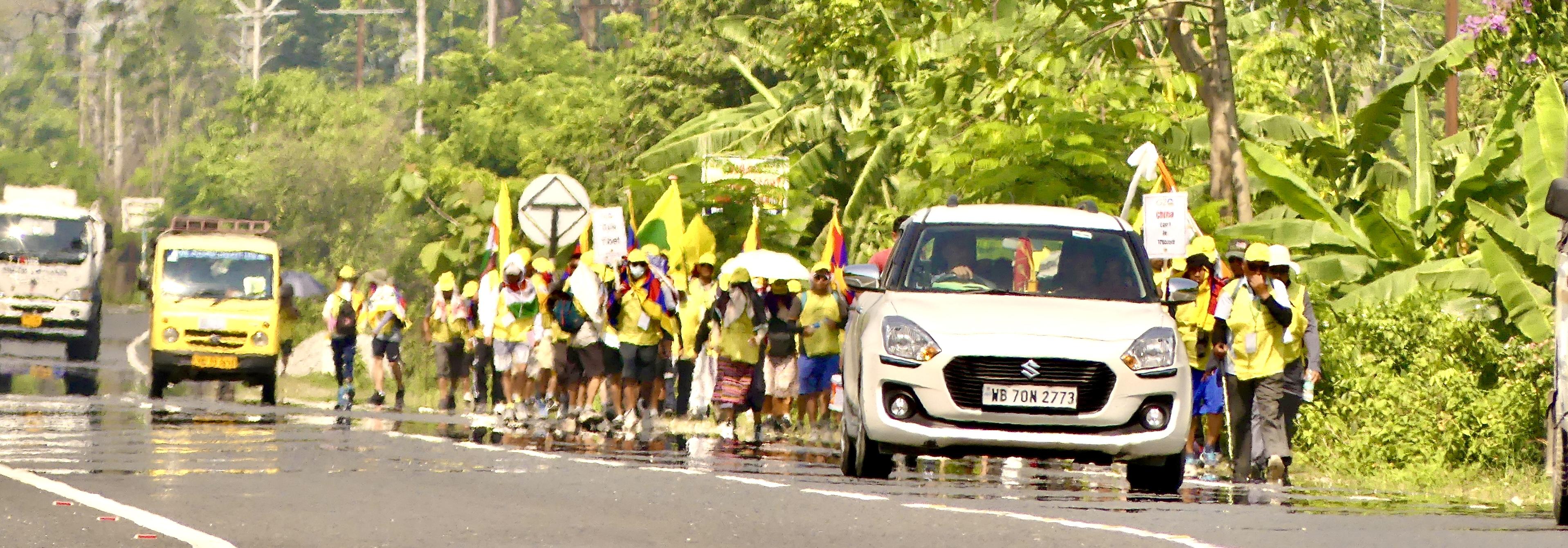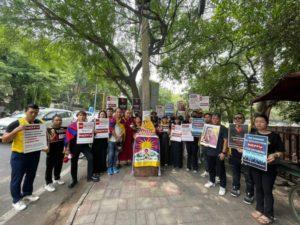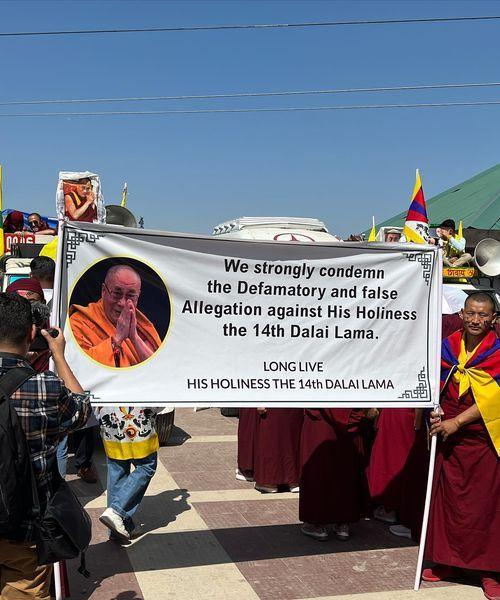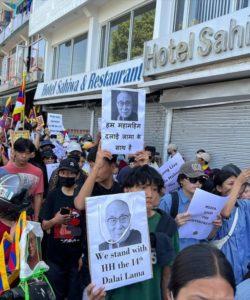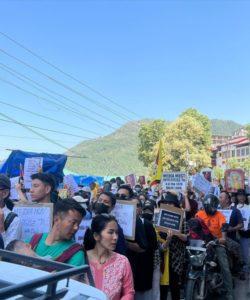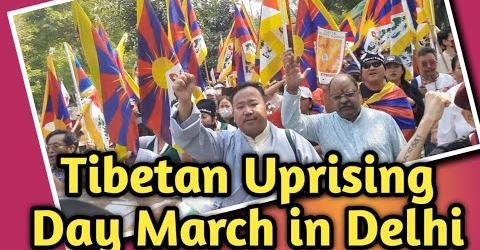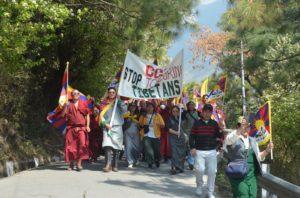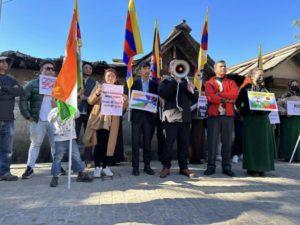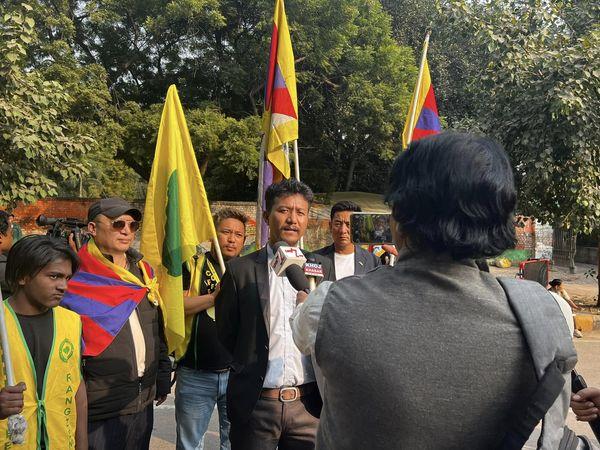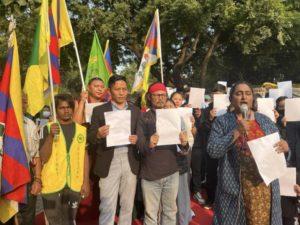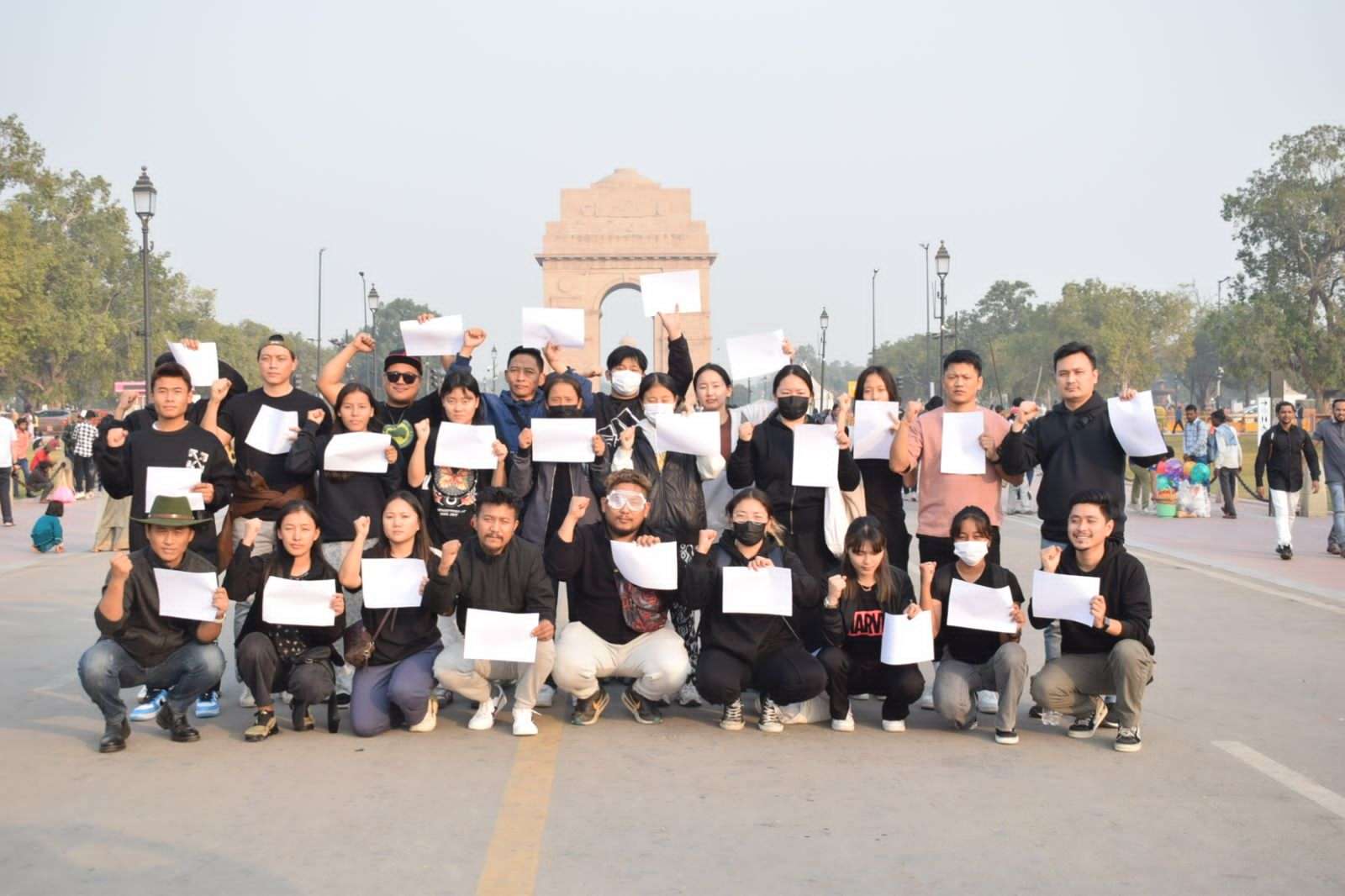
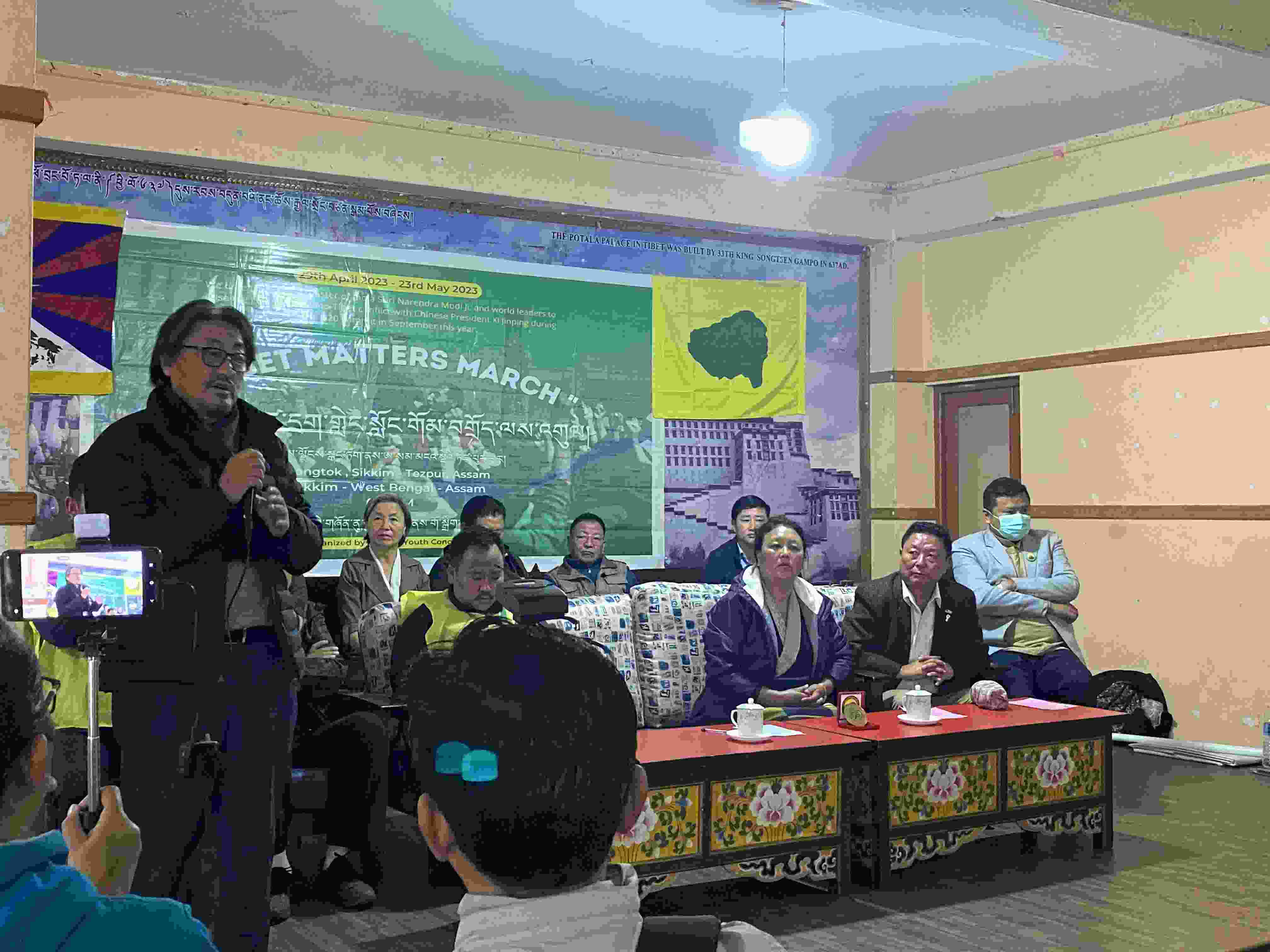
* 17 May to 23rd May 2017: Cycle Rally for Panchen Lama
Tibetan Youth Congress organized a bicycle rally that aims to highlight the critical situation in Tibet and to bring awareness about Gendun Choekyi Nyima, the 11th Panchen Lama and the youngest political prisoner in Tibet and to seek accurate information about Gendun Choekyi Nyima’s whereabouts and well-being.
The Tibetan Youth Congress seeks help from the world to free the 11th Panchen Lama and is asking the governments and international organizations to pressure China to meet the following demands;
1. Urge China to give evidence that the 11th Panchen Lama Gendun Choekyi Nyima is alive
2. Urge China to address the demands of self-immolations in Tibet.
3. Urge China to allow a fact finding international delegation to assess the situation inside Tibet.
4. Urge China to release all political prisoners.
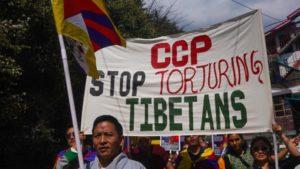
Peace March is one of the campaign strategy that Tibetan Youth Congress organizes. This is a non-violent form of protest. The first peace march organized by the Tibetan Youth Congress happened on 23rd March 1988 where several people marched from Nainital to New Delhi for the release of Tibet. The objectives of organizing Peace/Freedom March is;
1. To highlight the devious Chinese policies in Tibet which deliberately aim at subverting the Tibetans as a race and systematically destroy their very identity.
2. To highlight the deteriorating situation of the fundamental human rights and freedoms in Tibet today.
3. To highlight the nuclear militarization of the Tibetan plateau by China which directly threatens the security of India and peace in Asia as well as the world as a whole.
4. To highlight the most inhumane plight of the Tibetan Political Prisoners in Tibet in general by particularly referring to three prominent cases namely;
a) The 11th Panchen Lama, the world’s youngest political prisoner whose whereabouts are still not known since his arrest in 1995 and about whose safety there are grave doubts in the light of the suspicious circumstances of the deaths of the 10th Panchen Lama in 1989 and Khenpo Jigme Phuntsok more recently.
b) Tulku Tenzin Delek Rinpoche who was sentenced to death on 2nd December 2002 with a suspension of two years could be executed as early as 7th April 2004.
c) Geshe Sonam Phuntosk who was unfairly tried and and sentenced without proper investigation and who continues to languish in Chinese prison under very poor health.
Tibetan Youth Congress seeks the support of the international community in general and the United Nations in particular in the achievement of the above objectives.
* 11th February to 10th March 2004: Freedom March from Dharamsala to New Delhi
Tibetan Youth Congress undertook a ‘Freedom March’ commencing from February 11 to highlight the ever growing violation of the fundamental human rights and freedoms in Tibet under the repressive regime of Communist China and seek support from the international community in general and the United Nations in particular. There 80 Tibetan activists including monks, nuns and lay Tibetan people ranging from an age group of 19 years old to 81 years old took part in the Freedom March.
The demands made during this Freedom March are as follows;
1. The United Nations must pressurize China to stop the ongoing unfair trials of Tibetan Political Prisoners and to guarantee the necessary and equal rights to all the political prisoners of conscience to defend their cases.
2. The Chinese authorities must immediately release all the political prisoners who are still under their custody.
3. The Chinese authorities must stop the massive influx of Chinese population into Tibet which is a direct threat to the very survival of Tibetan identity.
4. The United Nations must send its representatives to Tibet to monitor and undertake independent investigation of the overall situation there.
5. China must withdraw all its troops and nuclear arsenals from Tibet.
The Freedom March ended on 10th March 2004 in New Delhi during the uprising day where several hundred Tibetans and non-Tibetan supporters gathered at Jantar Mantar to protest against the illegal occupation of Tibet by China and urge United Nations to pressurize China to stop human rights violations in Tibet.
* 10th December 2007 to 1st January 2008: March for Independence from Bangalore to Chennai
To observe the 59th World Human Rights day, Tibetan Youth Congress kick started the Tibetan Independence March at 11:00 AM from Bangalore City. 146 participants from nine different regions, namely Bylakuppee, Hunsur, Mundgod, Bhandra, Mainpat, Dharamsala, Delhi, Darjeeling and Bangalore took part in the march. The main purpose of initiating this March was to raise awareness about the illegal occupation of Tibet by the Communist China and that Tibet is not a part of China. The demands of the Tibet Independence March are as follows;
1. Independence for Tibet
2. Withdrawal of Order no.5, China’s new regulatory measures for reincarnations of living Buddha in Tibetan Buddhism.
3. Immediately STOP all forms of Human Rights violations inside Tibet.
4. No Olympics in China until Tibet is free.
5. Release of all Tibetan Political Prisoners including Gedun Choekyi Nyima, the 11th Panchen Lama, Tulku Tenzin Delek Rinpoche and Ronggye A’drak.
The participants reached Chennai on 1st January 2008 and ended the march by observing silence in the memory of those who sacrificed their lives for the cause of Tibet.
* 5th February to 10th March 2014: Tibetan Uprising March from Dharamsala to Delhi
Fifty-Five members of Tibetan Youth Congress organized a long peace walk ‘Tibetan Uprising March’ from Mcloed Ganj to the Indian capital Delhi to raise awareness of the critical situation in Tibet and to support the aspirations of the self-immolators and to show solidarity with Tibetans inside Tibet. The group of 55 marchers symbolizes 55 years of Chinese rule in Tibet, each marchers representing a dark and painful year under Chinese rule and walked the distance of about 600 kilometers. The march ended on 10th March where TYC presented a memorandum with a set of five demands to the Chinese Embassy in New Delhi and embassies of other countries to support our demands.
The five demands mentioned in the memorandum are as follows;
1. The Chinese Government must positively respond to the demands of the self-immolators, who have called for, among many other things, the return of His Holiness the Dalai Lama to Tibet.
2. Free all political prisoners, including the 11th Panchen Lama Gendun Choekyi Nyima, Tulku Tenzin Delek and Rongye Adak who are in Chinese jails.
3. China must allow the world media and an independent international youth group into Tibet to find out the grand reality.
4. Immediately cease population transfer into Tibet and stop insidious ‘Patriotic re-education campaign’ that is being forced upon the Tibetan people.
5. Stop nuclear testing, excessive mining and damming of rivers on the Tibetan Plateau which impact millions of people in Asia.
* 28th September 2015: Peace March by Tibetan supporters at United Nations in Delhi
A group of TYC supporters with the three hunger strikers, Mr. Tamdin Hrichoe, Ms. Tsewang Dolma and Mr. Tenzin Wangchuk went for a peace march from Jantar Mantar to the Office of the United Nations in New Delhi to urge an immediate intervention in Tibet.
Hunger Strike is a form of non-violence resistance and Tibetan Youth Congress has organized events of the Hunger strike over the past years. The hunger strike is a Mass Peoples Movement and is admittedly a desperate but a non-violent tactic by Tibetans who can see no indication that China intends to reverse its course in Tibet. Following are the events of the hunger strike organized by the Tibetan Youth Congress across the world to date.
The seven hunger strikes include six males and one female.
1. Mr. Tenchoe, 41 years
2. Mr. Tenzin Tsultrim, 20 years
3. Mr. Tamdin, 30 years
4. Mr. Tsering Wangchuk, 28 years
5. Mr. Lobsang Rabten, 30 years
6. Mr. Kunchuk, 48 years
7. Mrs. Lhamo Tsering, 45 years
The demands of the 16 hunger strikers were;
1. Immediate release of Political prisoners arrested in Tibet since 27th September 1987.
2. The United Nations to send an International tribunal to investigate the number of Tibetans killed, wounded and imprisoned since September 1987.
3. The United Nations prevail on China to:
· Permit Amnesty International and other NGOs to investigate human rights violations in Tibet.
· Permit foreign journalists to work in Tibet.
· Release all other political prisoners in Tibet since 1959.
4. The United Nations to support His Holiness the Dalai Lama’s Five Point Peace Proposal.
On 27th March 1988 at 6 PM the 16 hunger strikers withdrew their hunger strike after receiving a message from His Holiness the Dalai Lama.
On 25th April 1998, 47th day of hunger strike, the physical health of the hunger strikers have deteriorated and after two days i.e. on the 49th day the six hunger strikers were forcefully taken by police to government hospitals. It was on the same day (27th April) Pawo Thupten Ngodrup set himself ablaze shouting Pro-Dalai Lama and Pro-Tibet slogans. This marked the first self-immolation in the history of Tibet.
On 27th April 1998: the Second batch of hunger strikers started at 12 midnight. There were five hunger strikers with an empty bed left for Pawo Thupten Ngodrup since he was supposed to participate in the 2nd Batch. The hunger strike lasted till 15th May 1998.
1. To adopt a resolution in the 55th UNHCHR to censure China for continued Human Rights violations in Tibet including the appointment of a special rapporteur on Tibet.
2. To urge China to receive a delegation of the International Union of Socialist Youth (IUSY) to visit Tibet to investigate the Human Rights situation in Tibet.
3. To urge China to receive a delegation of the United Nations Committee on the Rights of Child to visit Gedun Choekyi Nyima, The 11th Panchen Lama of Tibet.
4. To urge China for the unconditional release of Tibetan Political prisoners, Tanak Jigme Sangpo, Ngawang Sangdro, Ngawang Choephel, Ngawang Phuljung, etc.
On 2nd May 1999, the hunger strike ended.
The three hunger strikers have three demands;
1. International Olympic Committee pressure China to improve human rights situation in Tibet and China.
2. China should disclose the details concerning the whereabouts of the Panchen Lama
3. China should unconditionally and immediately release all Tibetan Political prisoners.
On 26th February, the Tibetan Youth Congress called off its indefinite hunger strike following a visit by the executive member of International Olympic Committee (IOC) and President of European Olympic Committee Mr. Mario Pescante accompanied by Mr. Maza Pierpaolo, Vice President of Turin organizing committee (TOROC). At the press conference organized by the International Olympic Committee at the site of hunger strike, Mr. Mario Pescante assured the hunger strikers that IOC would follow up on the concerns expressed by the hunger strikers. He assured to raise the issue of Tibet’s human rights during the official IOC meeting on Sunday.
1. Gedun Choekyi Nyima, the 11th Panchen Lama, has been missing since 1995. The Chinese authorities have repeatedly stated that he’s alive. We demand concrete evidence that he is indeed alive.
2. In 2005, Tulku Tenzin Delek was sentenced to life imprisonment on alleged charges of “endangering national security”. Many other Tibetans have been imprisoned after engaging in political activity. The Chinese authorities have claimed that these people were sentenced to a fair judicial process. We demand that the PRC should produce a piece of convincing evidence that the judicial proceedings have taken place in a fair manner.
3. The PRC government maintains the position that Tibetans enjoy human rights in Tibet, despite many reports of human rights violations, including freedom of religion. We demand that the PRC produce a piece of concrete evidence that the Tibetans are enjoying human rights in Tibet.
4. China’s new railway lines in Tibet are causing a massive population influx of Han Chinese into Tibet, marginalization of native Tibetans, exploitation of natural resources, destruction of the environment, and eradication of Tibetan culture. China’s stated rationale for this railway is to bring economic prosperity to the Tibetan people. We, therefore, demand that the PRC produce reliable evidence that the railway aids Tibetan economically.
5. The Internal Olympic Committee (IOC)has aimed to improve the human rights situation in Tibet and China by giving Beijing an opportunity to host the Olympics. We, therefore, demand that the IOC produce conclusive evidence that the human rights situation in Tibet is acceptable.
On 9th August 2007, Tibetan Youth Congress has called off the hunger strike when Mr. Tempa Tsering, Kalon for Information and International Relations, Central Tibetan Administration visited the 14 Tibetans on indefinite hunger strike in New Delhi, to convey His Holiness the Dalai Lama’s appeal to immediately end their strike, organized by Tibetan Youth Congress on 8 July.
It was on the ninth day when the hunger strikers were arrested and forcibly taken to Ram Manohar Lohia Hospital for urgent medical care.
The hunger strike without food and water is part of Tibetan Youth Congress’s mass movement which is aimed to draw international attention to China’s Human Rights Violations in Tibet and to appeal world leaders to boycott the Olympics.
The hunger strikers had two demands:
1. Immediate withdrawal of so-called “Patriotic re-education” campaign and Chinese troops from Kirti Monastery and to unconditionally release all political prisoners including Gedun Choekyi Nyima, 11th Panchen Lama of Tibet and all those arrested recently from Ngaba.
2. Demand access for Tibetan Youth Congress delegation to assess the situation of political prisoners inside Tibet.
The indefinite hunger strike was called off on 19th May 2011 when TYC received staunch requests from the delegation of European Union and their assurance for continued support for Tibet, in particular, the issue at Ngaba Kirti Monastery coupled with pleas from our brothers and sisters inside Tibet.
1. Send a fact-finding delegation to assess the critical situation in Tibet.
2. Urge China to stop the undeclared martial law in Tibet.
3. Urge China to allow international media to investigate and report on the ongoing atrocities in Tibet.
4. Urge China to release the Panchen Lama, Tenzin Delek Rinpoche, and all the Tibetan Political Prisoners and
5. Urge China to stop ‘Patriotic Re-education’ campaigns in Tibet.
The target being the United Nations and their action, the strike was stopped when Mr. Parfait Onanga, representative of UN Human Rights, visited to hand over a letter from the UN Secretary-General Ban Ki-moon, signed by the UN High Commissioner for Human Rights, Ms. Navi Pillay.
The UN officials who brought the letter ended the hunger strike by offering the hunger strikers orange juice to break their month-long fast.
On the 25th day, TYC was asked to call off their strike with promises of an EU delegation to be sent, as well as the support of independent journalists to enter into Tibet.
TYC has put five demands to the United Nations that are as follows:
1. Urge the United Nations member states to raise the issue of Tibet at its General Assembly and Human Rights Council Session.
2. Urge China to address the demands of the self-immolations in Tibet.
3. Urge China to give evidence that the 11th Panchen Lama Gendun Choekyi Nyima is alive.
4. Send a fact-finding delegation to assess the current critical situation in Tibet.
5. Urge China to release all political prisoners.
On the 32nd day, the hunger strike was called off when a letter was delivered to Tibetan Youth Congress by Yuri Afanasiev, the resident coordinator and UNDP resident representative in India assuring the hunger strikers that the voices of the Tibetan people would be heard. TYC termed this as “Victory for Tibet”.
Environment Campaign
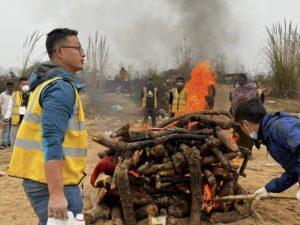
Tibetan Youth Congress initiates and organizes various campaigns relating to environment for the international community. TYC actively engages in various environment related campaigns like the ‘Clean India Campaigns’, ‘Swacch Bharat’ and organizes awareness talks and symposium highlighting the global importance of Tibet’s Environment. Tibetan Youth Congress also published a report on Tibet’s Environment and Developmental Issue.
Home to the largest store of fresh water outside the Arctic and Antarctic, Tibet is on the frontline of global climate change and is under serious threat from China’s failed policies. Like the Arctic, Tibet is experiencing profound climate change impacts. China’s hydro-damming and mineral extraction in Tibet combined with climate change, threaten to destroy Tibet’s unique ecosystems, disrupting life for a billion people downstream and across Asia. After the illegal occupation of Tibet in 1949, due to the Chinese government’s policies, Tibet has suffered from massive deforestation, mining and damming projects all contributing to climate change and affecting surrounding Asian nations and the world at large.
In order to bring attention of the international community to this continuing destruction of the environment of Tibet, TYC publishes reports, organizes awareness talks and takes part in Clean India Campaigns.
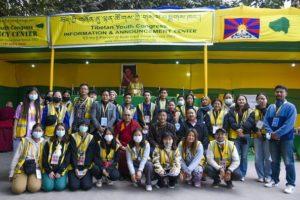
On the 4th of June 2017, just a day before the World’s Environment Day, Tibetan Youth Congress organized a symposium on ‘Tibet’s Environment, Asia’s Security’ held at India International Center in New Delhi. The symposium was organized to highlight the global significance of the Tibetan plateau and its current environmental situation in Tibet.
ISSUES:
· Water
The Tibetan Plateau, dubbed the “Third Pole” and part of the “Roof of the World” holds the third largest store of water, ice in the world and is the source of many of Asia’s rivers.
Tibet, known as the Water Tower of Asia, serves as the source of ten major Asian river systems flowing into some of the most densely populated countries: China, India, Vietnam, Cambodia, Laos, Thailand, Burma, Bangladesh, Nepal, Bhutan and Pakistan. Tibet’s environment, particularly Tibet’s rivers, is a geostrategic concern for South and Southeast Asia has been raised both at high levels of the Indian government as well as in civil society with wide range of coverage in the media. Tibetan climate also generates and regulates monsoon rains over Asia. For China’s government, Tibet’s water is another resource to be exploited, for hydro-electric power, diversion to supply people elsewhere in China, bottling as a consumer product, and even as a source of strategic influence over countries downstream who rely on water from Tibet’s rivers. Damming has taken place or will soon take place on every major river in Tibet. These dams change water flow, create new lakes, disturb local ecosystems and have significant effects downstream, including stopping the flow of silt, which makes agricultural land fertile. Dams and infrastructure such as new roads can force Tibetans from their lands. In a massive engineering project, China even plans to divert water from Tibet to feed 300 million of its own citizens.
· Mining
Chinese Government owned mining companies are quickening their extraction of copper, gold and silver in Tibet. These mines are usually based closed to rivers. Most workers in Tibetan mines are Chinese and the extraction takes place without regard to the local environment and areas of religious significance.
Tibet is also good in other resources including lead, zinc, molybdenum, asbestos, uranium, chromium, lithium and much more. Tibet is China’s only source of chromium and most of its accessible lithium is in Tibet. These raw materials are used in manufacturing of household goods, computers and smartphones, among much else. China is the world’s second largest producer of copper and world’s second biggest consumer of gold. The World Gold Council predicts that the consumption in China will double within a decade. Tibet’s reserve of copper and gold are worth nearly one trillion dollars.
· Nomads
Tibet’s rangeland with an average altitude of 4500 meters covers approximately 70% of Tibet’s total area. The Alpine grassland at high altitude occupies over 60% of the total rangeland in Tibet. Pastoralism on the Tibetan plateau is an adaptation to a cold environment at elevations above the limit of cultivation. Consequently, pastoral nomads of Tibet have maintained a unique pastoral culture for more than 8000 years. Tibet’s grassland represents one of the last remaining agro pastoral regions in the world. The pasturelands are made habitable through the co-existence of the Tibetan people and their yaks. According to a recent archaeological fieldwork, pastoral nomads, who developed deep understanding of grassland dynamics and veterinary knowledge for close to 9000 years, have used the Tibetan plateau extensively. Tibet’s nomads have lived sustainably on the plateaus grasslands for millennia, in harmony with this globally significant ecosystem. The forced relocation and settlement of Tibetan nomads is one of the most severe and arguably most misguided aspects of Beijing’s grand plans for Tibet. In only a few years Chinese authorities have reportedly moved over two million Tibetans from their home on the grasslands to newly constructed settlements, profoundly altering Tibet’s social and environmental fabric. The policy is as self-defeating as it is unjust. Stripped of the livelihoods that have sustained them for a thousand of years, a once proud and resilient people now face an uncertain future. And while carried out on the grounds of environmental protection, the controversial policy has further compromised the ecological balance of the Tibetan Plateau.
· Global Warming
Tibet is warming TWICE AS FAST as the rest of the world. Glaciers are melting; putting millions of people downstream at risk from flood, water shortages and sea level rises, threatening coastal communities and habitats. As temperature rises, the permafrost layers thaws, releasing trapped methane into the atmosphere. Methane is another powerful greenhouse gas, which exacerbates warming, further contributing to a climate change loop. Temperature increases and glacial melt will provide more water in the short term, but more run-off water will lead to increased flooding, negative impact on fisheries and destruction of river eco-systems. Over the long term, glacial shrinkage will reduce water supply in dry seasons, creating increased variability in water availability. The region can expect to experience shorter, more intense rainfall and lengthier drought periods. The fertile plains of Ganga, Indus and Brahmaputra depend on the rivers owing from the glaciers. Reduced water availability and lengthier drought periods will diminish local agricultural productivity. The World Bank has estimated that crop yields could decline by up to 30 percent in South Asia by the mid-21st Century. Higher temperatures are also expected to result in a decline in rice yields. Fish production will also face losses due to rising temperatures, reduced participation and more droughts, as overall river flow reductions affect fish migration. China’s response to climate change on the Roof of the World is to a) Dams and diverts Tibet’s rivers
b) Exploitation of Tibet’s rich mineral reserves with devastating environmental and social outcome.
c) Remove Tibetan nomads, the traditional stewards of the Tibetan plateau, from their home on the grasslands on grounds of “environ protection”.
d) Crush any voice that dares to speak out against China’s policies.
Panchen Lama Campaign
The Panchen Lama is the second-highest lama in Tibetan Buddhism, second only to the Dalai Lama. Panchen Lama is of the Gelug school of Tibetan Buddhism. And like the Dalai Lama, the Panchen Lama has been tragically impacted by China’s subjugation of Tibet.
In 1995 His Holiness the Dalai Lama recognized a young boy, Gedhun Choekyi Nyima, as the 11th Panchen Lama. Chinese authorities abducted Gedhun Choekyi Nyima and his family just weeks after; he was six-years old.
Gedhun Choekyi Nyima, the 11th Panchen Lama, and his family have been missing since 1995. The last time we had any information about his whereabouts was in 2010 when Chinese-appointed Tibet Governor, Padma Choling, told reporters that Gedhun Choekyi Nyima and his family are now living a good life as ordinary citizens in Tibet. China seeks to legitimize its rule in Tibet by claiming it plays a crucial role in the identification of Tibet’s two most important spiritual leaders, the Dalai Lama and in this case the Panchen Lama.
After repeated attempts to gain access to the boy, no international agencies or human rights organizations (including the United Nations) have been allowed to visit Gedhun Choekyi Nyima or his family, and their condition remains uncertain. In an attempt to establish their authority over all “internal affairs” of China (political or otherwise) the Chinese leadership nominated and selected their own 11th Panchen Lama in November 1995. Their selection of six-year-old boy named Gyaltsen Norbu, is another young victim in China’s plan to undermine and control the Tibetan people, their faith, religion, and their nation.
Tibetan Youth Congress organises awareness campaigns every year on 25th April during his birthday. In 2016, Tibetan Youth Congress organised a massive Cycle Rally for Panchen Lama from Dehradun to Delhi.
Advocacy for Tibet
Tibetan Youth Congress is a grass root organization that organizes major protests and also takes a major step to strengthen advocacy through publication of reports highlighting the Human Rights violations in Tibet, particularly: Religious Repression-the case of Larung Gar, Enforced Disappearance-the case of Panchen Lama, Assessing the developments in Tibet and its impact on the Environment, Torture and Death in Prison-the case of Tulku Tenzin Delek Rinpoche and Self-Immolations- protests against China’s repressive policies.
Tibetan Youth Congress has actively participated in conferences on Tibet, engaging with world leaders to help find a solution for the future of Tibet.
Tibetan Youth Congress also gives training to young Tibetans by organizing Tibetan Youth Leadership Training every year inculcating leadership skills and knowledge about the on-going situation in Tibet.
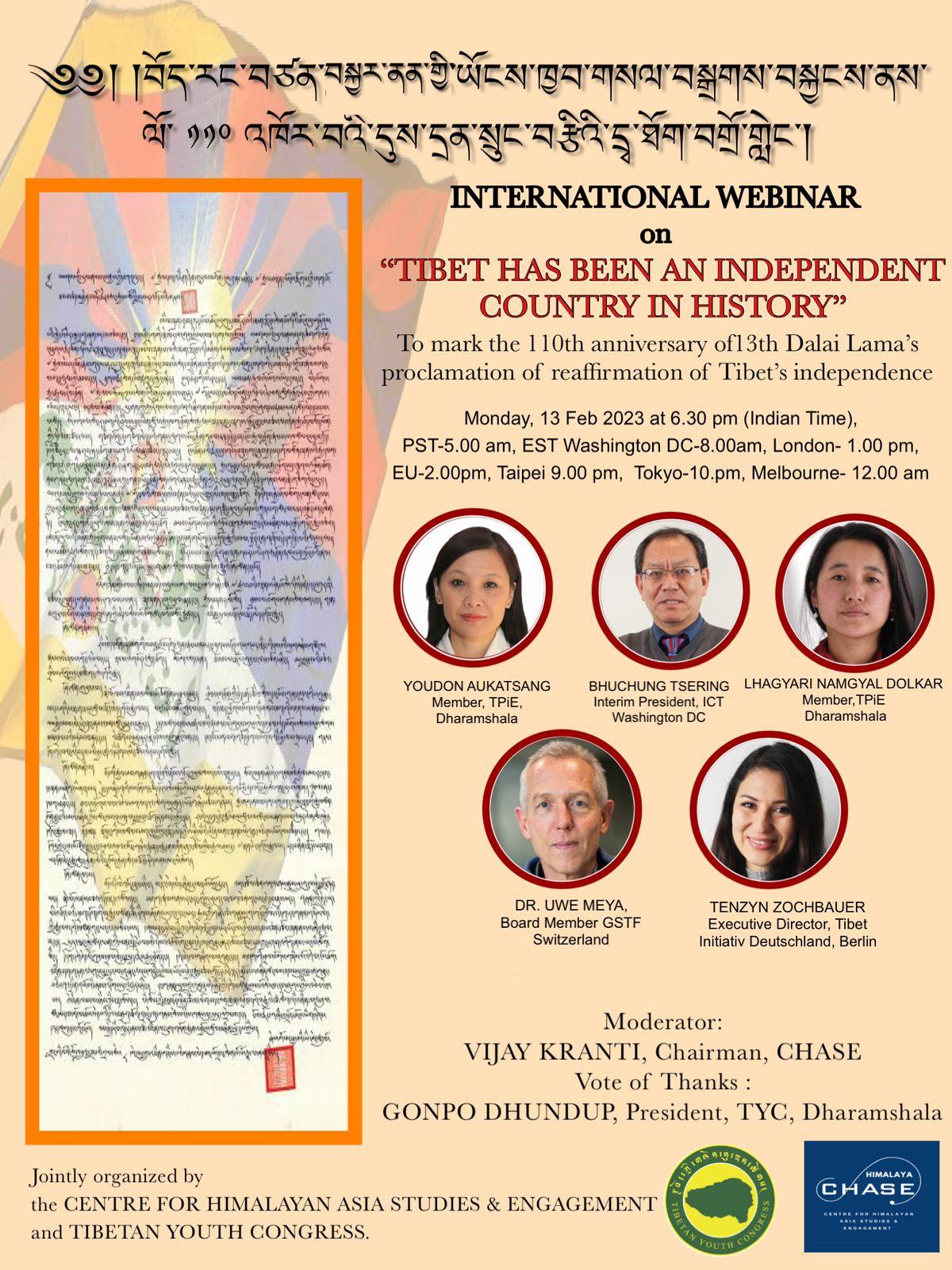
This year, Tibetan Youth Congress organized a month long campaign – BHARAT JARAN YATRA that aims to raise awareness on the issue of Tibet and garner support of the Indian people and government leaders to recognize that Tibet was historically an independent country and is currently an occupied nation by the Communist Government of China. The month long campaign began from three different cities – Mcleod Ganj, Chennai and Salugara.
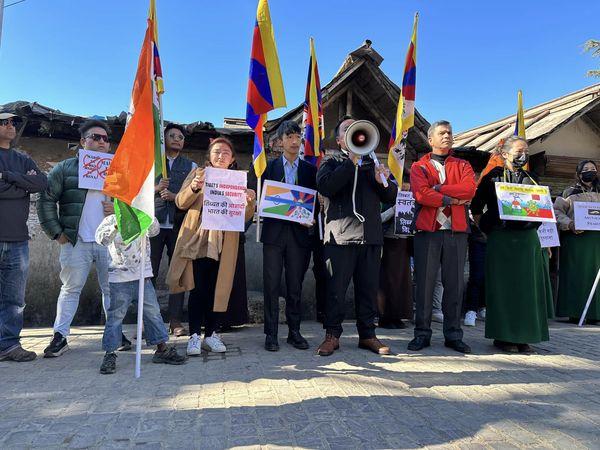
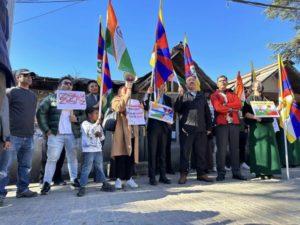
Tibetan Youth Congress, the largest Tibetan NGO in exile, will organize a protest rally in Delhi to highlight the issue that Tibet’s independence is the safest guarantee for India’s security and peace along the Himalayas. We urge the Indian government to take a proactive approach in resolving the issue of Tibet and at the same time we believe that Tibetans must be a part of discussions concerning its own borders.
The protest rally will be held on Friday August 11, 2017 10:00am from Ram Leila Maidan to Jan tar Mantar in Delhi. Prominent Indian leaders and Tibet supporters will be taking part in the protests

Tibetan Youth Congress 48th Working Committee Meeting will be held at the TCV Hostel in Koramangala Bangalore from August 28 till Sept 2 2017.