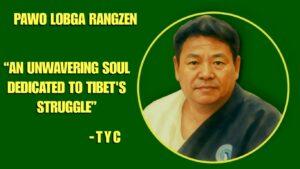
Martyr Lobga Rangzen: A Life Dedicated to Tibet’s Freedom


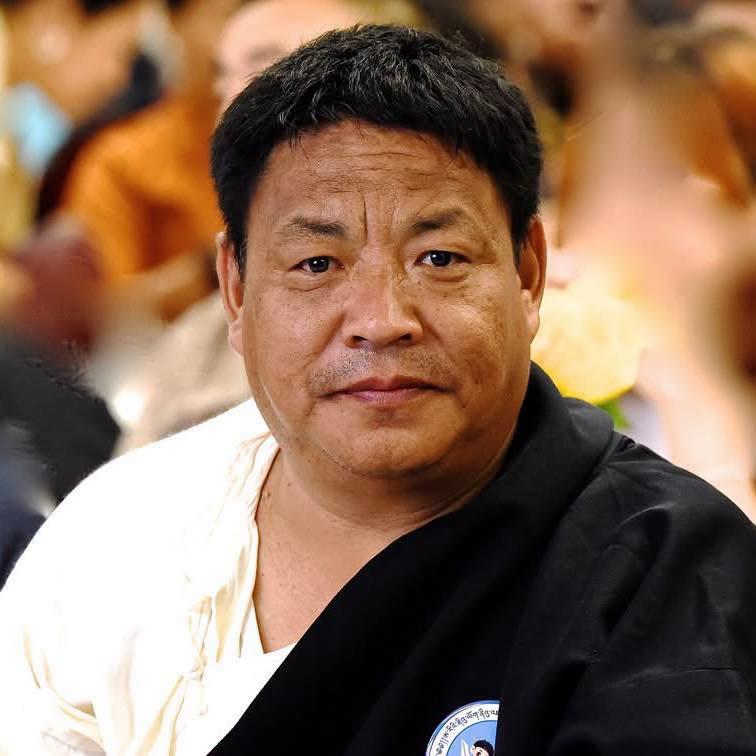
The Tibetan Youth Congress bows its head in profound sorrow and deepest respect as we commemorate the supreme sacrifice of Martyr Lobga Rangzen. His selfless act stands as one of the most solemn chapters in the history of the Tibetan freedom movement and serves as a lasting reminder of the immense sacrifices made by Tibetans in their unwavering pursuit of an independent Tibet. We honour not only the manner of his passing, but the extraordinary life of courage, conviction, compassion, and service that preceded it.

On 2 July 2026, at approximately 6:00 p.m., Martyr Lobga Rangzen, a devoted Tibetan freedom activist, self-immolated in front of the United Nations Headquarters in New York in protest against the Chinese government’s so-called “Ethnic Unity Law” and the relentless oppression and repression endured by Tibetans under Chinese occupation. His sacrifice, the first recorded Tibetan self-immolation on United States soil, sent shockwaves throughout the Tibetan community in exile and stands as a profound act of resistance against China’s continued occupation of Tibet.

His self-immolation came just one day after the implementation of China’s so-called “Ethnic Unity Law,” legislation widely condemned for accelerating the forced assimilation of Tibetans and other non-Han peoples through the systematic erosion of their language, culture, religion, and national identity. His final act was intended not merely as a protest, but as a desperate appeal to awaken the conscience of the international community to the grave human rights crisis unfolding inside Tibet. It reflected the immense suffering endured by Tibetans living under occupation and the unyielding determination of a people who refuse to surrender their identity or their aspiration for freedom.

At the time of his sacrifice, Pawo Lobga Rangzen was dressed in a traditional Tibetan chupa, with the Tibetan national flag raised proudly beside him. He also carried placards bearing the words “Free Tibet” and “China Out of Tibet.” He succumbed to his injuries at approximately 7:04 p.m. the same evening at Bellevue Hospital in New York.

Before carrying out his final act of protest, Pawo Lobga Rangzen livestreamed his last message to the Tibetan people through Facebook. In his final appeal, he urged Tibetans everywhere to remain united in the struggle for Tibet’s independence, reminding the world that Tibetans inside Tibet continue to endure severe restrictions on their fundamental human rights, including the denial of religious freedom, freedom of expression, and even the right to openly display photographs of His Holiness the 14th Dalai Lama. He declared:

“We did not lose our country. Our country exists—it remains under China’s occupation. We must reclaim our independence.”

Pawo Lobga Rangzen served as President of the Tibetan National Congress and formerly as an Executive Member of the Regional Tibetan Youth Congress of New York and New Jersey. Throughout his life, he remained unwavering in his commitment to the Tibetan freedom movement. Whether through public demonstrations, advocacy campaigns, community organizing, or political activism, he dedicated himself tirelessly to advancing the cause of Tibet’s independence and exposing the ongoing human rights abuses committed under Chinese occupation.

His courage was matched by remarkable humility and compassion. Beneath his steadfast determination was a deeply kind and joyful individual who quietly devoted himself to preserving Tibetan faith, culture, language, and national identity in exile. His love for his country was not merely expressed in words, but embodied through a lifetime of service, sacrifice, and unwavering conviction.

No words can adequately express the gratitude the Tibetan people owe to Pawo Lobga Rangzen. His extraordinary courage, unwavering conviction, and ultimate sacrifice have become an enduring part of our nation’s history. He gave not only his voice, his strength, and his years to the Tibetan freedom movement, but ultimately his very life so that the truth of Tibet’s suffering would not be forgotten. His sacrifice belongs not only to this generation, but to every Tibetan who dreams of seeing a free and independent Tibet.

The Tibetan Youth Congress extends its deepest condolences to his family, friends, fellow activists, and all those who had the privilege of knowing him. While they mourn the loss of a beloved son, brother, friend, and compatriot, the Tibetan nation mourns one of its bravest defenders. We share in their grief and pray that they may find strength and solace in knowing that his life and sacrifice have become an enduring source of inspiration for Tibetans across the world.

To date, more than 170 Tibetans are known to have self-immolated in protest against Chinese rule, representing one of the largest sustained waves of self-immolation as political resistance in modern history. Each sacrifice reflects the immense suffering endured under occupation and the unyielding aspiration of the Tibetan people to live in freedom. Despite these extraordinary sacrifices, the international and UN responses has too often failed to match the gravity, urgency, and moral responsibility demanded by the situation. The continued silence of the international community only deepens the responsibility upon all who believe in justice, human rights, and the fundamental right of every people to determine their own future.

Martyr Lobga Rangzen’s sacrifice will forever remain a solemn reminder that the struggle for Tibet continues. His final act was not born of despair, but of profound love for his homeland and an unshakable belief that Tibet must one day be free. The greatest tribute we can offer him is not merely to remember his sacrifice, but to carry forward the cause for which he gave his life. The Tibetan Youth Congress solemnly pledges to honour his legacy by continuing, with renewed determination and unwavering resolve, the struggle for the restoration of Tibet’s independence until the Tibetan national flag once again flies freely over a liberated Tibet.

May Martyr Lobga Rangzen’s noble sacrifice forever illuminate the path of the Tibetan freedom movement. May his courage strengthen our resolve, his conviction inspire our actions, and his memory remain eternal in the heart of every Tibetan. We shall remember him with profound gratitude, immeasurable respect, and an enduring commitment to fulfill the dream for which he made the ultimate sacrifice—a free and independent Tibet.
statement (Tib)       statement (Eng)

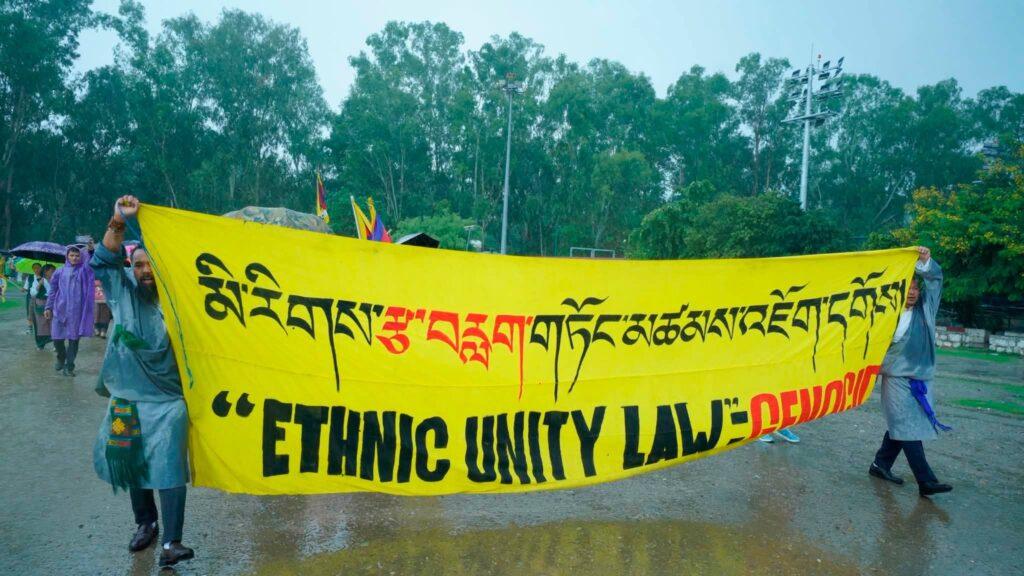
Pomegranate Protest: Abolish Ethnic Unity Law


On 1 July 2026, as the People’s Republic of China implemented its so-called “Ethnic Unity and Progress Law,” Tibetans around the world stood united in opposition to an unjust law aimed at undermining the distinct identity of the Tibetan people.

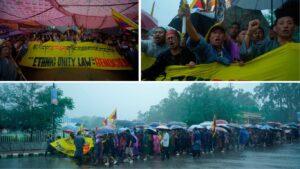
During its ongoing 55th Working Committee Meeting, the Tibetan Youth Congress (TYC) organized a protest in Dehradun under the banner “POMEGRANATE PROTEST: Abolish the Ethnic Unity Law.” The protest campaign condemned the implementation of the law,  as it is the gravest threats to Tibetan identity, language, culture, and religion in recent decades.

With the Central Executive Committee and representatives from more than 30 Regional Chapters gathered for the 55th Working Committee Meeting, members of the Tibetan Youth Congress came together in a united display of resistance against the law and reaffirmed their commitment to safeguarding the rights and identity of the Tibetan people.

The protest was further strengthened by the participation and solidarity of members from Bharat Seema Jagran Manch, Bharat Tibet Sahyog Manch (BTSM), and Bharat Tibet Mitra, who joined the demonstration in support of the Tibetan cause.


TIBETAN YOUTH CONGRESS STATEMENT: 
The Tibetan Youth Congress (TYC) strongly condemns the implementation of the so-called People’s Republic of China’s “Ethnic Unity and Progress Law,” which comes into force on the 105th founding anniversary of the Chinese Communist Party. This legislation represents one of the most serious threats to the survival of Tibetan identity in recent decades.
Under Han-dominated leadership, Beijing continues to consolidate its unilateral control by institutionalizing policies aimed at assimilating Tibetans through political repression, cultural interference, economic domination, and coercive state measures. More than six decades after the occupation of Tibet, the Chinese Communist Party has intensified its campaign to Sinicize Tibet under the guise of promoting “ethnic unity.” By advancing a single Han-centric national identity.
The pomegranate metaphor seeks to portray all ethnic groups as inseparable parts of a single Chinese national identity. However, Tibet’s distinct civilization, language, religion, and historical experience cannot be reduced to a seed within another nation’s narrative. True coexistence must be based on respect for identity, not assimilation.
The concerns raised by the United Nations High Commissioner for Human Rights and various UN Special Rapporteurs clearly demonstrate that China’s assimilation policies violate internationally recognized human rights standards, including the rights to culture, language, religion, and self-determination.
Therefore, the Tibetan Youth Congress calls upon:
1. The Government of India and democratic nations worldwide to unequivocally condemn China’s forced assimilation policies in Tibet.
2. The United Nations Human Rights Council and its member states to take concrete multilateral action to address the deteriorating human rights situation in Tibet.
3. The People’s Republic of China to immediately abolish the colonial boarding school system and cease all policies aimed at erasing Tibetan identity, language, religion, and culture.
4. The international community, governments, and human rights organizations to closely monitor the implementation of this law and hold the Chinese government accountable for policies that threaten the survival of Tibetan identity and violate internationally recognized human rights norms.
The implementation of this law marks a dangerous turning point in China’s policies toward Tibet. If left unchallenged, it threatens the intergenerational transmission of Tibetan language, religion, and culture, and risks the irreversible destruction of the Tibetan nation’s unique identity and heritage.
The Tibetan Youth Congress unequivocally condemns and rejects this genocide law. As we declared during the Black Hat March Campaign in April, we once again raise our voice in opposition to this assimilationist legislation, which stands in direct contradiction to the principles enshrined in the United Nations Charter, international human rights standards, and fundamental freedoms. Such measures undermine cultural diversity, religious freedom, and the right of communities to preserve, protect, and develop their own identity, language, and way of life.
On this 1 July, Tibetans across the world stand united in defense of our identity, culture, and fundamental rights, as well as our collective aspiration for a Free and Independent Tibet. We call upon global leaders, democratic governments, human rights defenders, and people of conscience everywhere to stand in solidarity with Tibet and resist all attempts to erase the identity, dignity, and existence of the Tibetan people. The struggle for Tibet is not only a struggle for one nation—it is a struggle for justice, human dignity, cultural survival, and the universal right of all peoples to live freely and determine their own future.
“Injustice anywhere is a threat to justice everywhere. We are caught in an inescapable network of mutuality, tied in a single garment of destiny. Whatever affects one directly, affects all indirectly.” –   Martin Luther King Jr., Letter from the Birmingham Jail

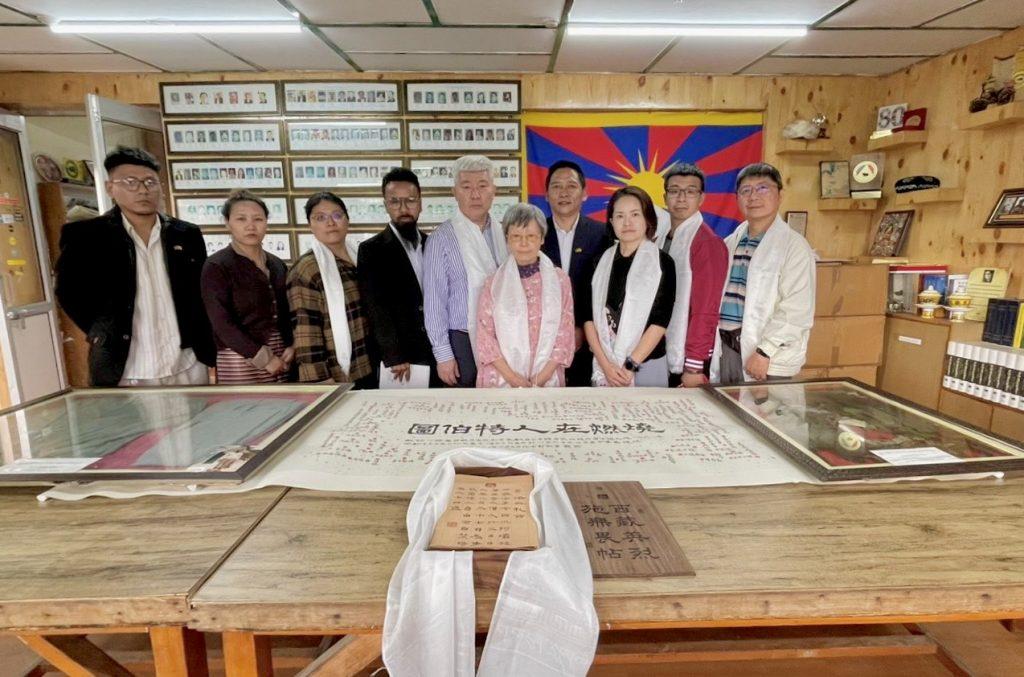
Tibetan Youth Congress Executive member meeting with representatives from six Civil societies from Taiwan at Tibetan Youth Congress Centrex Office, Dharamshala

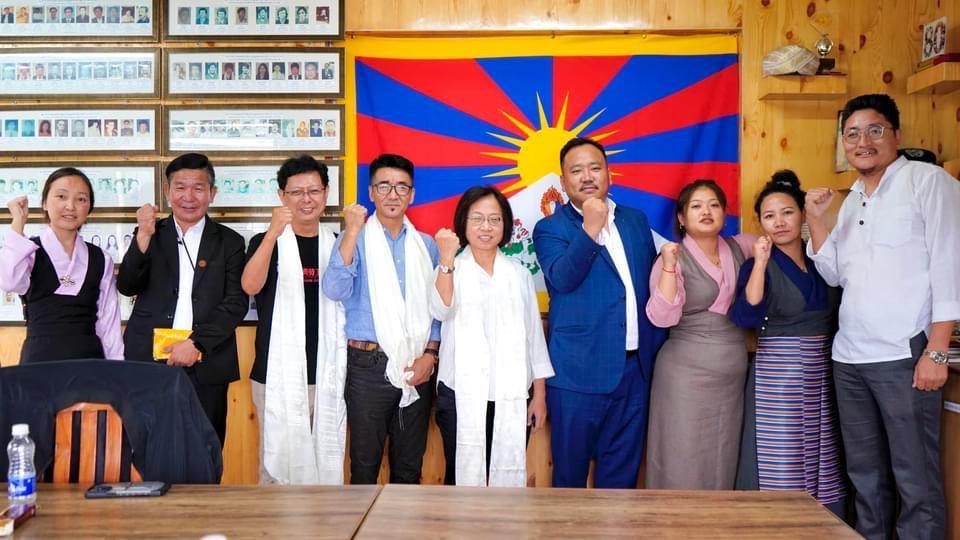
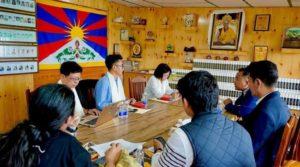
The Centrex Executive Members of the Tibetan Youth Congress (TYC) held a meeting with representatives from six non-governmental organizations (NGOs) from Taiwan at the TYC Centrex Office, Dharamshala.
The meeting commenced with an introduction to the Tibetan Youth Congress, presented by TYC Vice President Mr. Tashi Targyal accompanied by TYC General Secretary Mr, Tenzin Lobsang. He briefed the delegation on TYC’s role as the largest and most active Tibetan organization, led by young Tibetans, TYC also leads other Tibetan civil society groups when organizing large-scale events and joint protests.
Following this, Mr. Tsang Hsun Ho, Founding President of Taiwan Citizen Participation, introduced the Taiwanese delegation representing six different civil society organizations.
He mentioned “The situation of Tibetans self-immolating was a matter of great concern to me. When i saw the second individual who self immolated, The detail that really struck me, I saw him engulfed in flames and the black smoke escaping his mouth. This sight touched me deeply, and the fact that it occurred on my birthday made it an extremely profound experience.”
During the session, Mr. Tsang presented his calligraphy artwork on the conference table, which featured the names of all Tibetan martyrs as a gesture of solidarity and respect.
On the table were displayed portraits and memorabilia of the first Tibetan self-immolator, Martyr Thupten Ngodup, and Martyr Jamphel Yeshi, along with the calligraphy artwork symbolizing the sacrifices of all Tibetan martyrs. The TYC Vice President expressed deep gratitude, stating, “We held a prayer session for four of our Tibetan martyrs at the same table where your calligraphy was placed a work representing all Tibetan martyrs. In that moment, we felt the presence of their noble souls among us. With a heavy heart, I thank you for creating this profound moment.”
Although initially scheduled for half an hour, the meeting extended to two hours due to the deep sense of mutual understanding, shared values, and common purpose that emerged during the discussion. Both sides exchanged views on civil society engagement, advocacy for human rights, and the importance of youth-led movements in promoting freedom and democracy.
The session concluded with a mutual commitment to continued dialogue and cooperation between Tibetan and Taiwanese civil society organizations.

TAIWANESE DELEGATIONS LED BY TASHI TSERING LA VISITS TYC OFFICE

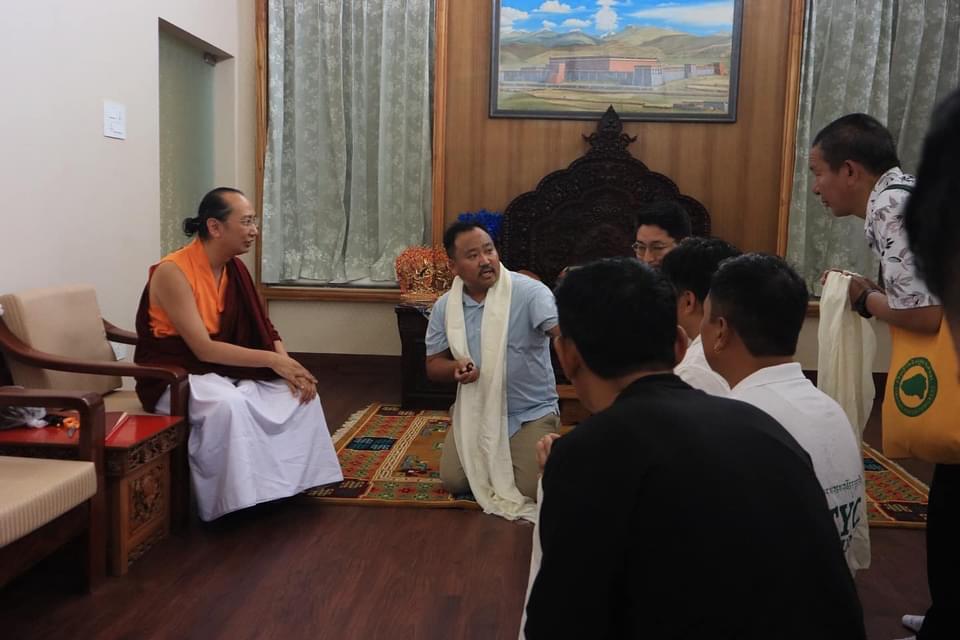
The President of the Tibetan Youth Congress and representatives from three Tibetan NGOs had a productive meeting with the delegations of Human Rights Network for Tibet and Taiwan team, including Director Sun You-lian, general secretary Mr Tashi Tsering along with Attorney and lecturer Ms. Liao Hui-Fang. Discussed networking and future collaboration to counter the CCP.

150. Jamyang Losal

Jamyang Losal, 22

A young Tibetan monk set himself on fire and died on Friday in northwestern China’s Qinghai province in an apparent challenge to Chinese rule in Tibetan areas, a Tibetan living in the area said.

The protest brought to 150 the number of self-immolations by Tibetans living in China since the wave of fiery protests began in 2009.

Jamyang Losal, aged about 22, set himself ablaze at around 5:00 a.m. on May 19 near the People’s Hospital in Kangtsa (in Chinese, Gangcha) county in Qinghai’s Tsojang (Haibei) Tibetan Autonomous Prefecture, a local source told RFA’s Tibetan Service.

“He did not survive his protest,” RFA’s source said, speaking on condition of anonymity

“Losal’s body was taken away by the police, and when his family members went to the police station to claim his remains, the police refused to comply with their request,” he said.

“Losal was a monk belonging to Gyerteng monastery in Kangtsa’s Nangra town,” RFA’s source said, adding that about 20 monks now study at the monastery, which is located about 30 kilometers (18 miles) south of the Kangtsa county seat.

Losal was a native of Dong Gya village in Kangtsa county’s Nangra township, the source said.

Radio Free Asia

150. Jamyang Losal

Jamyang Losal, 22

A young Tibetan monk set himself on fire and died on Friday in northwestern China’s Qinghai province in an apparent challenge to Chinese rule in Tibetan areas, a Tibetan living in the area said.

The protest brought to 150 the number of self-immolations by Tibetans living in China since the wave of fiery protests began in 2009.

Jamyang Losal, aged about 22, set himself ablaze at around 5:00 a.m. on May 19 near the People’s Hospital in Kangtsa (in Chinese, Gangcha) county in Qinghai’s Tsojang (Haibei) Tibetan Autonomous Prefecture, a local source told RFA’s Tibetan Service.

“He did not survive his protest,” RFA’s source said, speaking on condition of anonymity

“Losal’s body was taken away by the police, and when his family members went to the police station to claim his remains, the police refused to comply with their request,” he said.

“Losal was a monk belonging to Gyerteng monastery in Kangtsa’s Nangra town,” RFA’s source said, adding that about 20 monks now study at the monastery, which is located about 30 kilometers (18 miles) south of the Kangtsa county seat.

Losal was a native of Dong Gya village in Kangtsa county’s Nangra township, the source said.

Radio Free Asia

149. Chagdor Kyab

Chagdor Kyab
Date: May 2, 2017
Protest location: Bora (Chinese: Bola) in Gansu, the Tibetan area of Amdo
Age: 16

Current whereabouts/wellbeing: Unknown

Info: Reports have emerged of a self-immolation on May 2 of a Tibetan teenager, a student named Chagdor Kyab. Sources from the region told Radio Free Asia that after setting himself on fire near Bora monastery, Chagdor Kyab shouted “Tibet wants freedom” and “Let His Holiness the Dalai Lama come back to Tibet” while he burned. It is not known if he is still alive.

149. Chagdor Kyab

Chagdor Kyab
Date: May 2, 2017
Protest location: Bora (Chinese: Bola) in Gansu, the Tibetan area of Amdo
Age: 16

Current whereabouts/wellbeing: Unknown

Info: Reports have emerged of a self-immolation on May 2 of a Tibetan teenager, a student named Chagdor Kyab. Sources from the region told Radio Free Asia that after setting himself on fire near Bora monastery, Chagdor Kyab shouted “Tibet wants freedom” and “Let His Holiness the Dalai Lama come back to Tibet” while he burned. It is not known if he is still alive.

148. Wangchuk Tseten

148. Wangchuk Tseten
Date: April 15, 2017
Protest location: Kardze (Chinese: Ganzi) in eastern Tibet
Age: Unknown

Current whereabouts/wellbeing: Unknown, believed unlikly to have survived

Info: Footage has emerged of a self-immolation on April 15 of a Tibetan man, father of three Wangchuk Tseten. Wangchuk Tseten was from Kardze Prefecture. A video circulating online shows police spraying fire extinguishers on a blackened, smoky body lying on the ground. It is not known if Wangchuk Tseten is still alive, although it is believed to be unlikely.

Back To Top