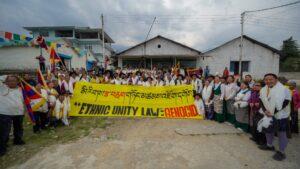
Black Hat March | Day 8 : From Sundernagar to Bilaspur

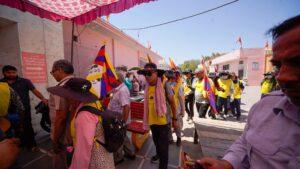
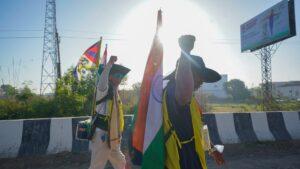
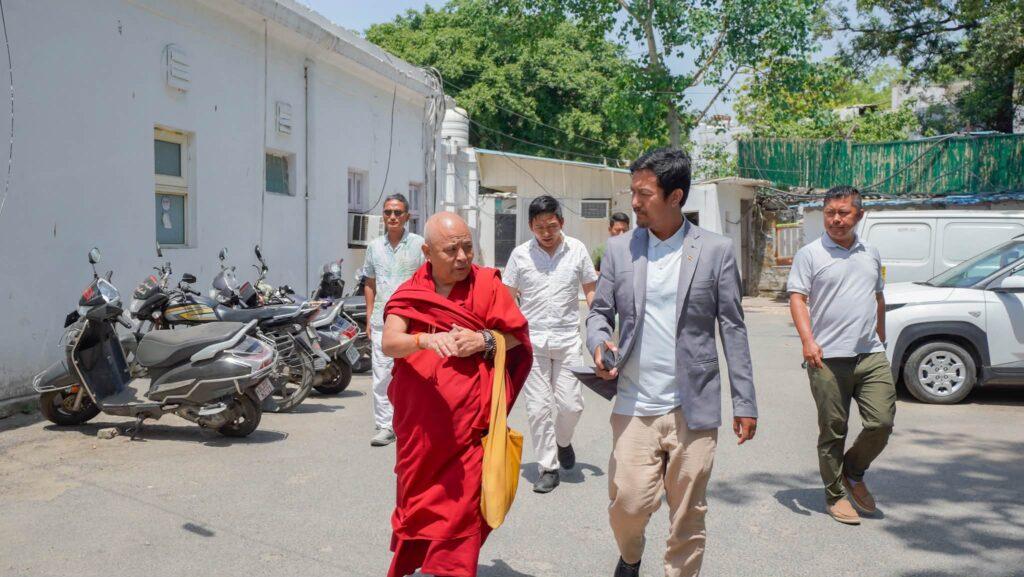
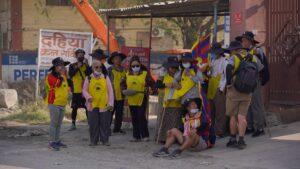
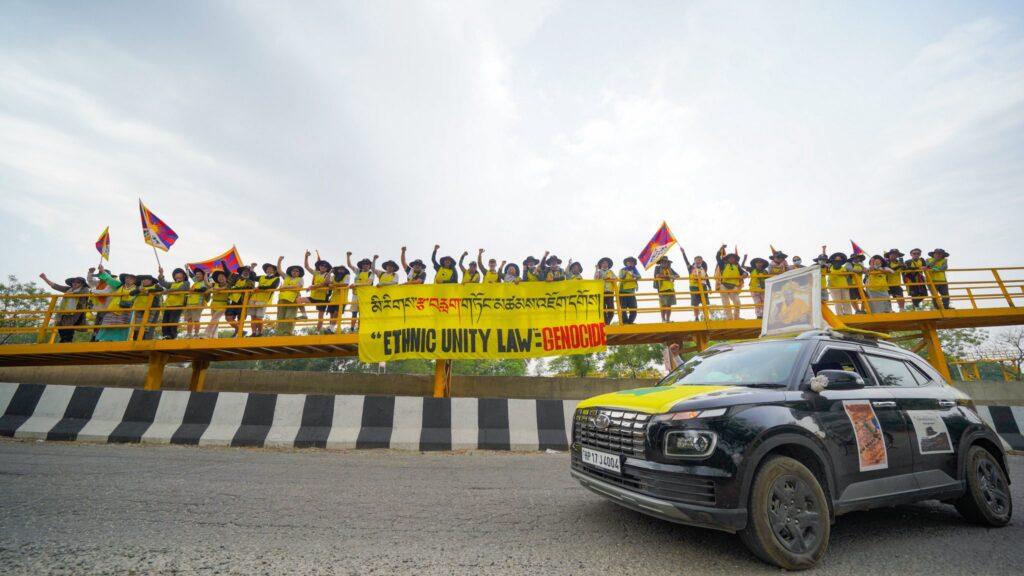
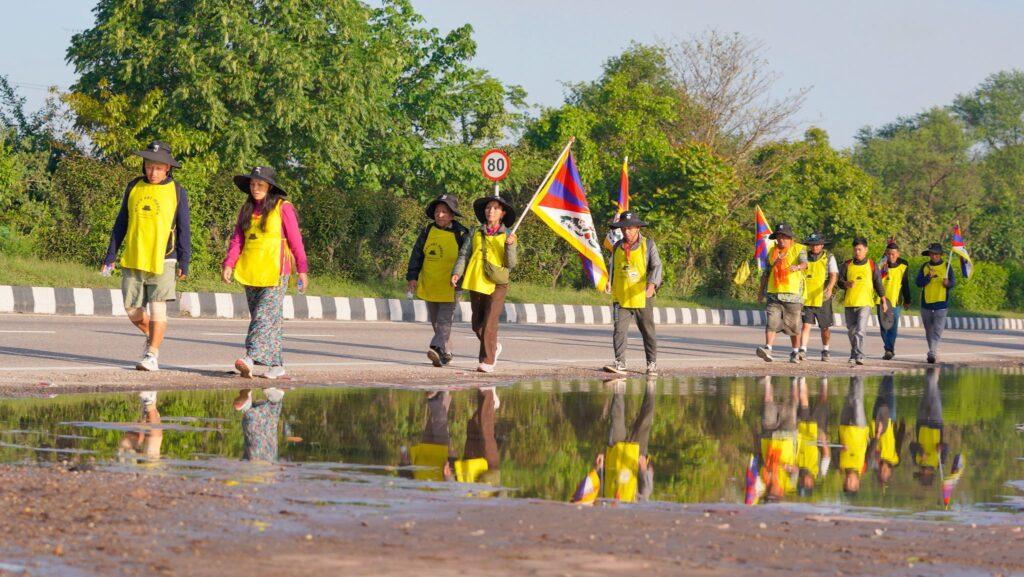
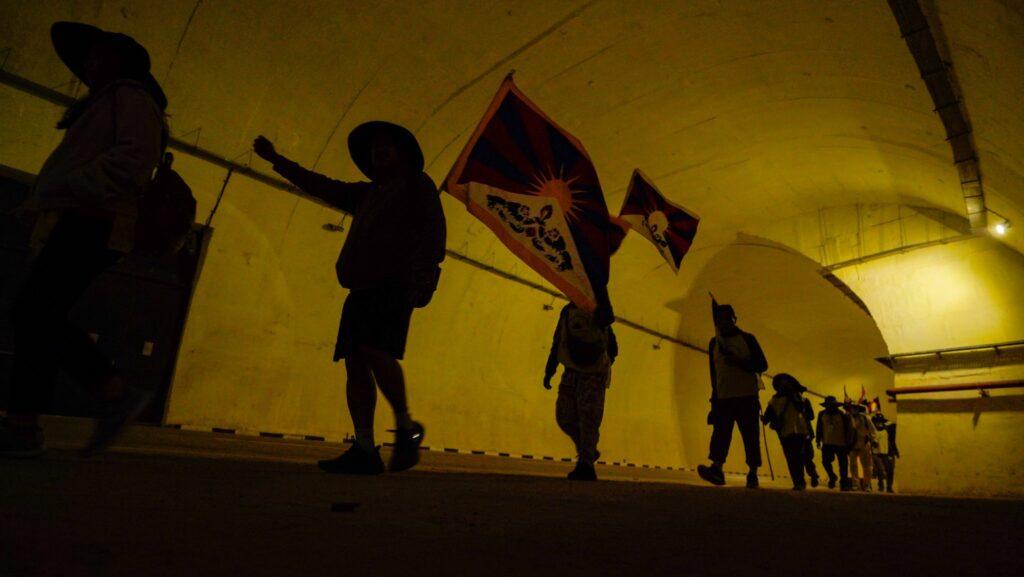
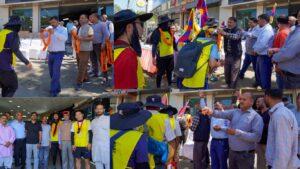
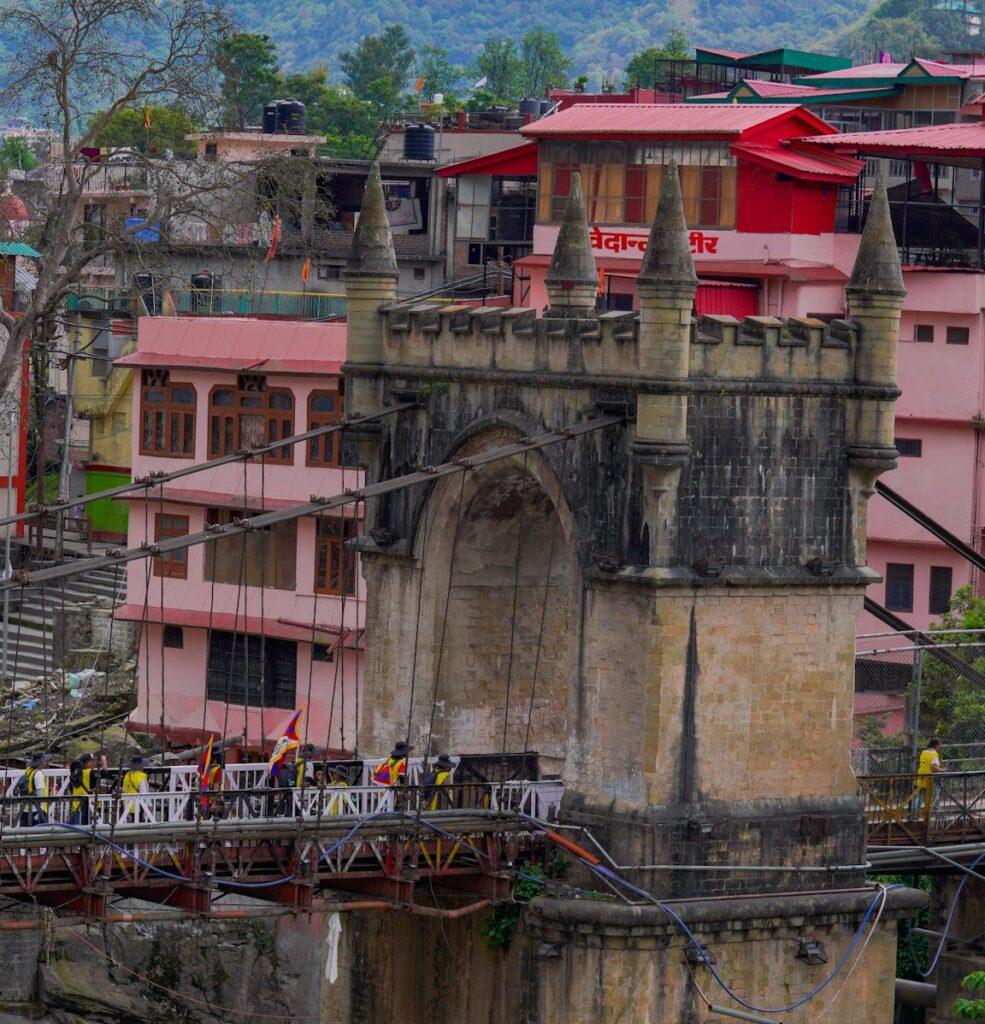
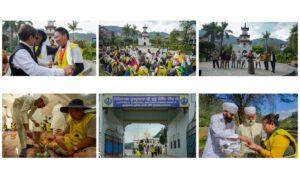
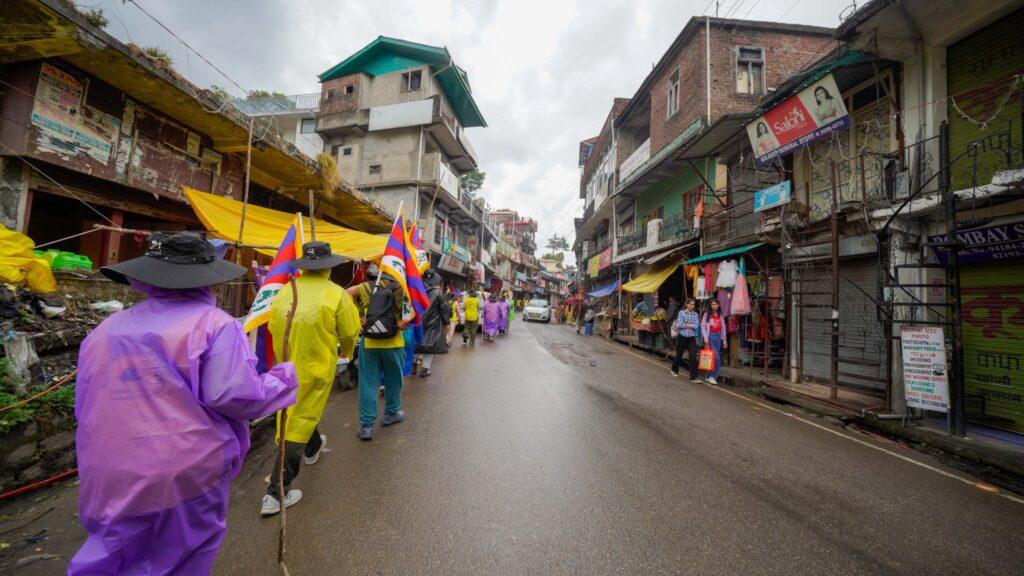
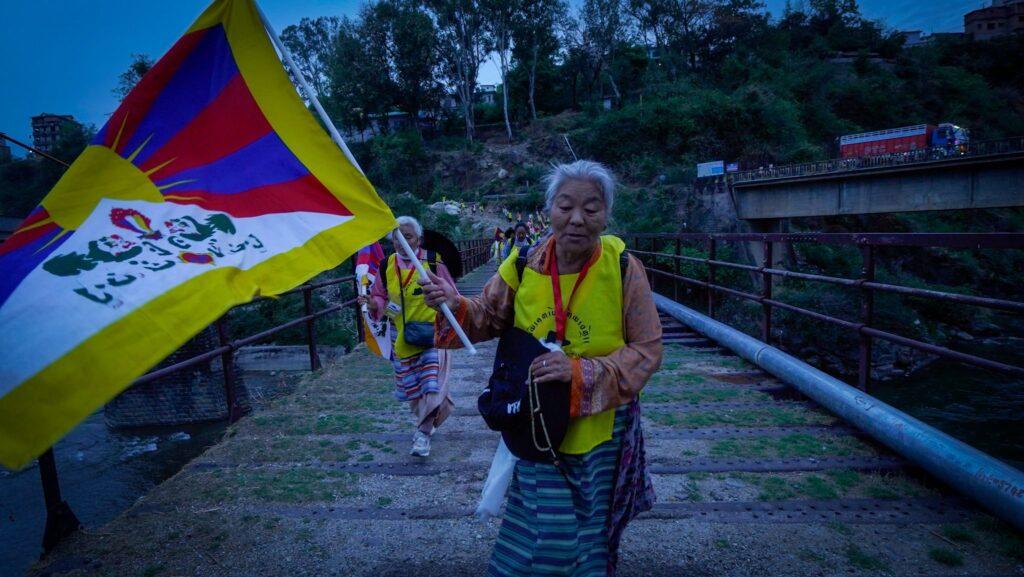
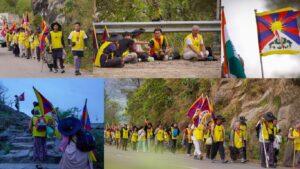
The day began as usual with morning prayers, followed by a briefing from the organizing committee outlining the day’s activities. With determination and unity, the marchers set out on a long and demanding journey, walking for nearly 11 hours and covering more than 40 kilometers.

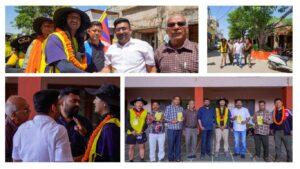
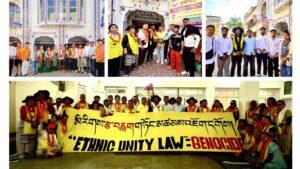
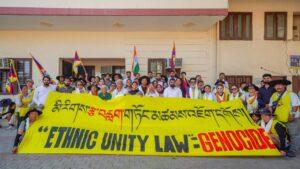
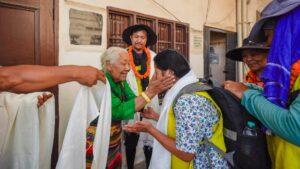
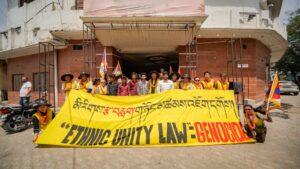
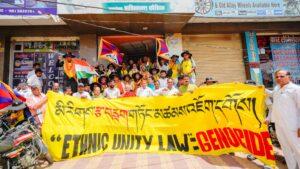
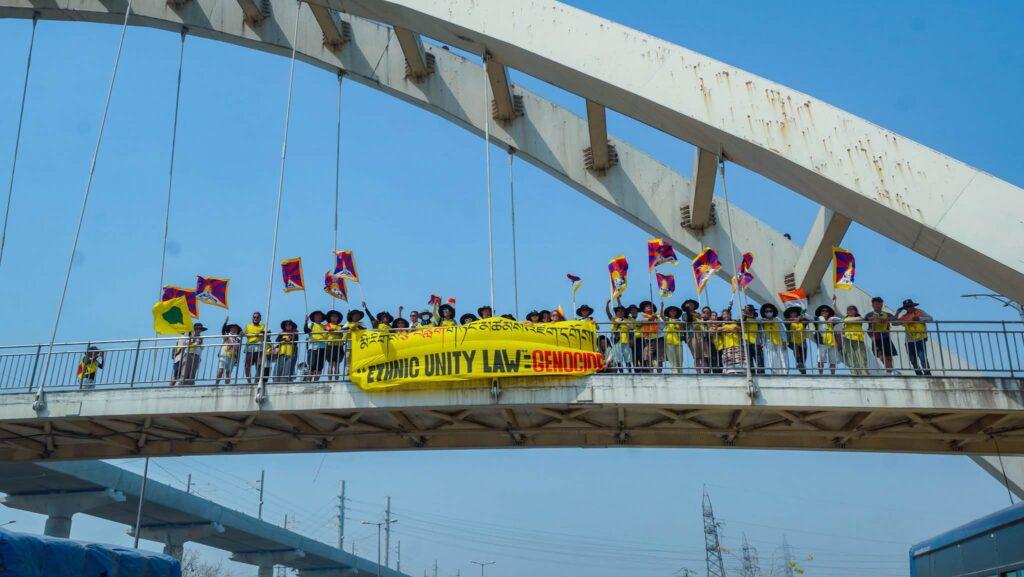
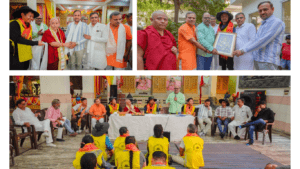
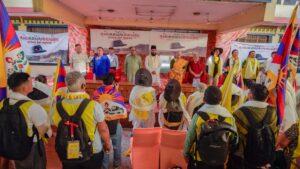
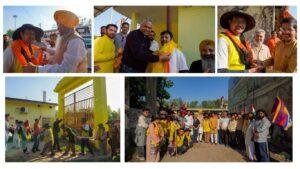
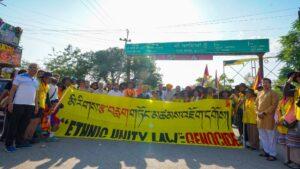
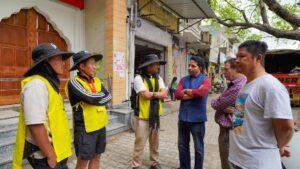
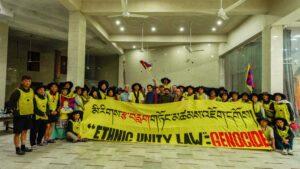
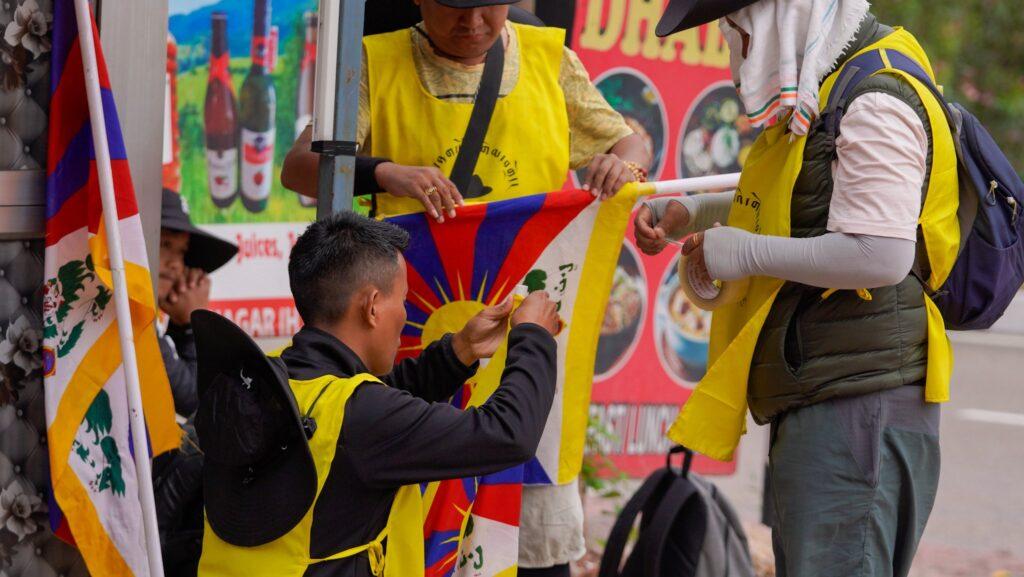
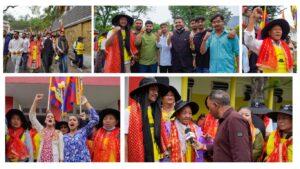
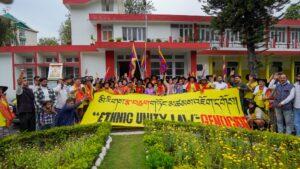
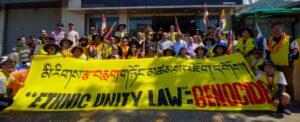
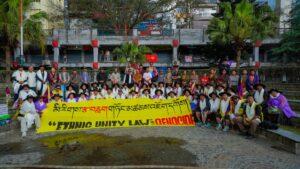
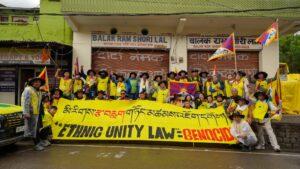
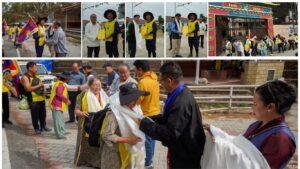
At around 4:00 PM, the marchers reached Bilaspur, where they received a warm welcome from local youth, who thoughtfully arranged refreshing tea. Shortly thereafter, a protest campaign was organized in the Bilaspur market, where members of the local community joined in strong solidarity, raising their voices against the so-called “Ethnic Unity Law ” which equals to genocide of the tibetans and other occupied countries under China. The collective participation reflected growing awareness and support for the Tibetan cause.


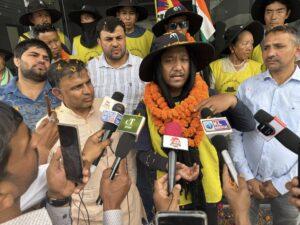
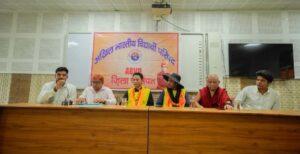
A press meeting was also held at the Circuit House, further amplifying the message of justice, human rights, and the urgent need to address the ongoing situation in Tibet. Throughout the march, powerful slogans such as “Bharat-Tibet mitrata amar rahe” echoed in the air, energizing the marchers and reinforcing a shared sense of purpose and resilience.

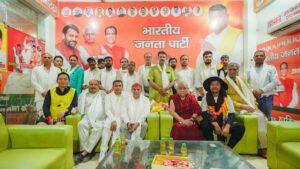
The Tibetan Youth Congress expresses its deep gratitude to the Rashtriya Swayamsevak Sangh youth members of Bilaspur—Shri Shiv Kumar, Shri Rakesh, Shri Rupendra Piyush, Shri Pradyuman, Shri Rahul, Shri Karthik, Shri Surya, Shri Munish, Shri Rampal—and the entire Bilaspur community for their generous support and unwavering solidarity with the Tibetan cause.

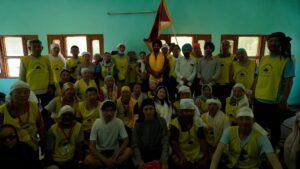
The day concluded with a restful stay at the Government Bungalow (MCD Hall), surrounded by Tibetan and Indian friends. It was a day marked by unity, endurance, and shared commitment—one that will remain a lasting source of inspiration for all involved.


Black Hat March | Day 7 : From Mandi to Sundernagar

Day 7 of the Black Hat March began early at 5:00 AM, as usual. However, unlike other days, it commenced with the solemn chanting of Mani prayers in remembrance of the late Ngari Rinpoche Tenzin Choegyal, marking the 49th day since his passing. The prayers were offered with deep reverence, reflecting on his spiritual legacy and the profound impact he had on the Tibetan community. Following this moment of reflection, the organizing committee briefed the marchers before they commenced their journey towards Sundernagar.

At around 12:30 PM, the marchers were warmly welcomed upon arrival in Sundernagar. Members of the taxi union, jeep union, local businessmen, and residents greeted them with flower malas (flower garland) and showered them with petals. Under the leadership of Krishna Chand, Durga Dutt (Palu Sharma), Tara Chand, and Balak Ram (Tek Chand), the local community came together in strong support of the Tibetan Youth Congress Black Hat March campaign and the Tibetan cause. They also expressed deep appreciation for the courage and determination of the marchers.


After a brief halt of about an hour, the marchers proceeded to their place of stay. Notably, the pace of the march was faster than in previous days, reflecting the growing strength and determination of the participants. Despite continued efforts by China to suppress the Tibetan people, the resolve of the marchers remains strong with each step.

In the evening, the marchers were served a traditional Tibetan dinner of thenthuk, prepared by the team’s cook. The meal evoked memories of their forefathers and provided a comforting sense of home after a long and demanding day.


Black Hat March | Day 6 : From Padhar to Mandi

Day 6 began early at 5:00 AM with prayers, followed by a briefing from the organizing committee outlining the day’s program. Shortly thereafter, the march commenced.

On the way to Mandi, the marchers were graciously hosted for lunch at a Gurudwara by members of the Sikh community, who warmly served meals to all.

At around 2:00 PM, the marchers arrived in Mandi, where they received a heartfelt welcome from several dignitaries and members of the local Tibetan community. Among those present were Lhamo Choedon, Coordinator Secretary, Mandi Tibetan Settlement Office; Ngawang Dhondup, former President, BRDL Mandi; Yeshi Dorjee, Vice President, LTA Mandi; and Tashi Tsewang and Tashi Phuntsok, Members of LTA Mandi.

The marchers were also welcomed by members of the Tibetan community in Mandi, including TSO Pema, as well as Shri Danesh Kumar from the Indo-Tibetan Friendship Society, Mandi, who kindly facilitated a press briefing on the Black Hat March campaign.

The day concluded with a night stay at Guru Gobind Singh Gurudwara in Mandi, where the marchers were served a wholesome meal of rajma chawal, bringing the day to a warm and fulfilling close.


Black Hat March | Day 5: From Bir to Padhar

The fifth day of the Black Hat March commenced at 5:00 AM with prayers, followed by a briefing from the organizing committee on the day’s planned activities.

Although there were no Tibetan settlements along the route, the marchers felt a strong sense of support from well-wishers between Bir and Padhar as they continued their journey through Himachal Pradesh.

On the way to Padhar, the marchers had the opportunity to interact with members of the press and media. This engagement was made possible with the support of former Deputy Speaker Kungo Acharya Yeshi Phuntsok, Shri Raj Thakur (ITFS member and businessman), and RTYC Chauntra President Sonam Yougyal.

One powerful reflection from a second-generation marcher deeply resonated with all:

“Why did I join the Black Hat March? Because I am concerned that if we do not continue to struggle for our cause, the new generation may forget our nation’s cause. That is why I joined this campaign, and my children will join in the future. This has become an example for them — a moment of pride.”

Despite facing a thunderstorm and heavy rain, the marchers’ spirits remained unshaken. The day’s journey concluded successfully upon reaching Padhar, marking another determined step forward in the movement.

Black Hat March | Day 4: From Tashijong to Bir

Day 4 of the Black Hat March began early at 5:00 AM with prayer meetings, followed by a briefing from the organizing committee outlining the day’s activities.
At around 9:30 AM, the marchers were warmly welcomed at the Ghatta Kangra–Mandi border by representatives of the Bir Local Assembly, the Bir Tibetan Settlement Officer, the Chauntra Tibetan Settlement Officer, RTYC Bir, RTYC Chauntra, and Chauntra Zabsang Choekharling Monastery. Special thanks are extended to RTYC Chauntra President, Mr. Yougyal la, for arranging a press meeting for the Black Hat March.

On the way to Bir, Namlang Resort generously hosted tea for all the marchers. Along the route, members of the Tibetan community from Dergey greeted the marchers with heartfelt warmth at Bir market.

By 1:30 PM, the marchers reached the Bir Tibetan Settlement, where a large gathering warmly received them. The President of the Tibetan Youth Congress addressed the community, stating “We are responding to the Chinese Communist Party that we will continue our struggle to reclaim our country — even if it takes generations.”

Notably, the marchers reached their destination faster than in the previous three days, driven by the strength of their shared purpose. Every step felt lighter with hearts united in one goal — a Free Tibet.

The day concluded with dinner hosted by RTYC Bir, ending on a note of hope and determination that freedom is not far away.


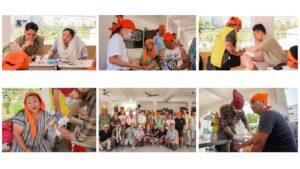
The Tibetan Youth Congress extends heartfelt gratitude to the Bir Tibetan Settlement, RTYC Bir, and RTYC Chauntra for their generous support in providing accommodation and dinner. Special thanks are also due to the Regional Tibetan Health Dispensary for donating medical kits, and to the TCV Suja students for offering relaxing massages to the marchers. Sincere appreciation is extended to Namlang Resort and the Tibetan community of Bir for their kind donations and unwavering support.

Statement by the Tibetan Youth Congress on the 113th Anniversary of Tibet’s Declaration of Independence

TIBETAN YOUTH CONGRESS STATEMENT
113th Anniversary of Tibet’s Declaration of Independence
(13 February 1913)
On the 113th anniversary of Tibet’s Declaration of Independence, the Tibetan Youth Congress (TYC) once again reaffirms that Tibet has always been an independent nation and shall remain so. Contrary to the false claims propagated by the so-called People’s Republic of China (PRC), Tibet’s historical relationship with neighbouring powers, including the Mongol Khans and later the Ming and Manchu (Qing) emperors, was based on the Preceptor Patron (Chö-yon) relationship. This relationship was one of mutual spiritual and material support and never one of political subordination. At no point did it signify Tibet’s incorporation into China as a sovereign territory.
Following China’s unlawful invasion of Tibet, the PRC constructed a fabricated historical narrative to justify its actions under the guise of “liberation,” falsely asserting that Tibet and China are one nation. However, extensive historical evidence, from Tibet’s imperial period through the early twentieth century, clearly demonstrates Tibet’s status as a distinct and independent country.
A particularly compelling example lies in the reign of His Holiness the 13th Dalai Lama. On 13 February 1913, after the collapse of the Manchu Qing dynasty, His Holiness issued a proclamation declaring Tibet’s independence. This declaration followed years of Chinese military aggression in eastern Tibet and the deployment of Chinese troops to Lhasa under the pretext of safeguarding Tibet. Despite repeated clarifications that Tibet’s relationship with China was spiritual rather than political, Chinese forces attempted to abduct and assassinate His Holiness, which ultimately forced him into exile in India.
After the fall of the Qing dynasty, Tibetans from all social strata successfully expelled Chinese troops from central Tibet. Upon his return to Lhasa, His Holiness the 13th Dalai Lama issued a Five Point Decree. In the fourth point, he clearly stated: “Though not prosperous or technologically advanced like other countries, Tibet is an independent nation living in peace and governed by religious principles.”
Further evidence of Tibet’s independence can be found in the 1888 Sikkim Expedition, as documented in British historical records. In 1890, the British government signed a treaty with China concerning the Tibet-Sikkim border and trade relations. This treaty later became ineffective when the British realized that Tibet was not bound by it and that China had no authority to enforce it within Tibet. This realization implicitly acknowledged Tibet’s independent status.
Even the so-called Seventeen Point Agreement of 1951 serves as evidence of Tibet’s independence, as China deemed it necessary to negotiate and obtain signatures from Tibetan representatives rather than exercising sovereign authority.
Tibet’s system of governance has always been unique, with His Holiness the Dalai Lama serving as both the spiritual and temporal leader. Therefore, religion plays a central role in Tibetan political and social life. In 2007, the Chinese State Administration of Religious Affairs issued Order No. 5, asserting state control over the recognition of reincarnated Tibetan lamas. This order requires government approval for religious reincarnation and represents a direct interference in Tibetan Buddhism.
In 1995, Chinese authorities abducted the 11th Panchen Lama, Gedhun Choekyi Nyima, and appointed a state-selected alternative. This act was intended to control the future recognition of the Dalai Lama’s reincarnation and further undermines Tibetan religious freedom under the watch of the international community.
Tibet’s struggle for independence is firmly grounded in international law, particularly the right to self-determination as enshrined in the Charter of the United Nations and the International Covenant on Civil and Political Rights. The Tibetan people, as a distinct nation with a unique history, culture, language, and governance system, are entitled to freely determine their political status and pursue their economic, social, and cultural development without external coercion.
The Tibetan Youth Congress reiterates that the Tibetan freedom movement is fundamentally non-violent and rooted in democratic values, justice, and respect for human rights. To the United Nations, its member states, parliamentarians, international organizations, supporters of Tibet, democratic nations, political activists, and environmentalists, we express our hope that you will continue to stand in solidarity with the Tibetan cause. We urge the international community to acknowledge Tibet’s historical status, to hold the People’s Republic of China accountable for its violations of international law, and to work collectively to end the suffering of the Tibetan people.
On this solemn anniversary of Tibet’s Declaration of Independence, the Tibetan Youth Congress declares that it will not bend under Chinese oppression and will continue its peaceful and determined struggle for the restoration of Tibet’s independence.
ONE DAY TIBET WILL BE FREE, VICTORY OF TIBET
Tibetan Youth Congress

Tibetan Youth Congress Official Rebuttal to the Recent Statement Issued by Gyaltsen Norbu at State symposium in Shigatse

Press Conference: Tibetan Youth Congress Official Rebuttal to the Recent Statement Issued by Gyaltsen Norbu at State symposium in Shigatse.

The Tibetan Youth Congress strongly rejects the recent statement made by the Chinese-appointed monk at a state-sponsored symposium, which claimed that the reincarnations of the Dalai Lama and Panchen Lama must follow Chinese law and receive approval from Beijing. TYC condemns this assertion as a blatant political interference in Tibetan religious traditions and an attempt to legitimize state control over reincarnation.

TYC reaffirms that the recognition of Tibetan spiritual leaders is a sacred religious matter, free from external coercion, and firmly opposes any effort by the Chinese government to impose authority over Tibetan faith and identity.

Rebuttal statement(Eng) Rebuttal statement (Tib)


TIBETAN YOUTH CONGRESS, STATEMENT. 10th DECEMBER 2025.

Statement of the Tibetan Youth Congress on 77th Human Rights Day and 36th anniversary of the Nobel Peace Prize awarded to His Holiness the great 14th Dalai Lama.

Today marks the 77th Human Rights Day and the 36th anniversary of the Nobel Peace Prize awarded to His Holiness the great 14th Dalai Lama. After the First and Second World Wars, which caused immense suffering and loss of life, the United Nations adopted the 30 Articles of the Universal Declaration of Human Rights on 10 December 1948 to safeguard international security, peace, and cooperation. Since then, 10 December has been observed as Human Rights Day.

During this period, the Chinese invasion of Tibet began, resulting in severe suffering and widespread violations of human rights. This gave rise to a non-violent struggle for Tibet and the wellbeing of Tibetans, led under the guidance of His Holiness the great 14th Dalai Lama. Through his tireless advocacy for peace, wisdom and compassion, he has promoted secular ethics and universal values worldwide. On 10 December 1989, His Holiness was awarded the Nobel Peace Prize for his principled commitment to peace, tolerance, and the protection of Tibetan cultural heritage through a consistently non-violent approach. Thirty-six years later, it remains essential to remember the circumstances that shaped both Human Rights Day and the recognition bestowed upon His Holiness.

Since China’s aggressive military invasion and prolonged illegal occupation of Tibet, more than a million Tibetans have lost their lives. Across the three provinces of Tibet, where Tibetan religion and culture once flourished, now monasteries, stupas, and countless sacred altars are being destroyed. In an effort to erase Tibetan traditions and identity, Tibetan children were separated from their families and placed in Chinese colonial boarding schools designed to assimilate the younger generation and sever their connection to their heritage.

Inside Tibet, Tibetans continue to face severe repression. They are denied basic rights, subjected to harsh treatment, and placed under constant surveillance. Even the 11th Panchen Lama, Jetsun Tenzin Gendun Yeshi Thinley Phuntsok Palsang, along with many Tibetan political activists, has faced severe restrictions and mistreatment. DNA collection has been used as a tool for intrusive monitoring, while fundamental rights—cultural, religious, linguistic, and the freedom of movement and speech —are systematically denied.

These relentless abuses have led to the tragic reality of nearly 200 self-immolations inside Tibet and in exile, marking the highest number ever recorded in a struggle driven by the pursuit of freedom and human rights.

Even more, the Chinese government has carried out widespread deforestation, extensive mining, and large-scale industrial projects across Tibet. Which resulted in demolishing villages, forcibly relocating communities, fencing grasslands and exploiting Tibet’s fragile environment. These rapid industrial projects and resource extraction have caused significant ecological disruption, impacting not only Tibet but also its neighboring countries and the Himalayan region.

Furthermore, China’s transnational repression, targeting Tibet, Taiwan, Hong Kong, the Uyghurs, and Southern Mongolia through intimidation, suppression, surveillance, data

exploitation, covert interference infiltrating key institutions and fueling social instability, demonstrates a grave disregard for International norms and fundamental human rights, posing serious threat to global peace and security. The recent suspicious death of Tulku Hungkar Dorjee in Vietnam, further heightens concerns regarding the reach and impact of transnational repression.

Since the arrival of His Holiness the great 14th Dalai Lama and his close followers in India 66 years ago, numerous efforts have been made to raise global awareness about the Tibetan cause. Through programs, organizations, and appeals to the United Nations, Tibetans and supporters worldwide have continued to voice the urgent need for freedom, peace, independence, and human rights. Meanwhile, violations by the Chinese government persist, alongside the erosion of Tibet’s environment, religion, culture, and identity.

On this day, the Tibetan Youth Congress solemnly pledges that until the Independence status is restored, we will continue to raise our voices against suppression and atrocities committed by the Chinese Communist Party. As we are fortunate to live in a democratic country and enjoy the freedom to express our rights, it is essential that all Tibetan must unite and actively participate in the movement for the independence of our occupied homeland. It is equally vital to take personal responsibility in safeguarding our language and script.

To the United Nations and its member states, parliamentarians, Non-Governmental organizations, supporters of Tibet, democratic nations, political activists, and environmentalists, we express our hope that you will continue to stand in solidarity with the Tibetan cause and work to end the suffering.

In conclusion, we pray for the long life of His Holiness the great 14th Dalai Lama, and the reunion of all Tibetan people, in exile and at home. May our country be free, independent, and filled with peace and dignity. Free Tibet. 

10 December Press statement (English) བོད་ཀྱི་གཞོན་ནུ་ལྷན་ཚོགས་ཀྱི་བསྒྲགས་གཏམ། तिब्बती युवा कांग्रेस की वक्तव्य । 稿子12.10


PRESS CONFERENCE

FOR IMMEDIATE RELEASE 

Tibetan Political NGOs Condemn Cremation of Deceased Tibetan Lama in Vietnam Without Family Consent Following his Death in Custody; Demand International Investigation

Body Reportedly Cremated Before Inquiry Fueling Suspicions of Chinese Involvement in Arrest and Death of Tulku Hungkar Dorje Rinpoche

(Dharamshala, 21 April 2025)- Tibetan Political NGOs voice vehement condemnation following reports of cremation of Tulku Hungkar Dorje Rinpoche, a highly revered Tibetan leader, without family consent. Rinpoche is reported to have tragically died in custody in Ho Chi Minh City, Vietnam, in late March, under suspicious circumstances that demand immediate scrutiny. Disturbing information indicates that Rinpoches’s remains were cremated in Vietnam without the consent of his family. The Rinpoches’ detention, his untimely death in custody, and the subsequent unauthorised cremation constitute grave violations of international legal standards and can be seen to represent a deliberate obstruction of justice, raising serious questions regarding China’s involvement in his apprehension and death.

Tibetan Political NGOs reiterate their urgent demand for a full and transparent international investigation into the circumstances surrounding Tulku Hungkar Dorje Rinpoche’s death.

Ju Tenkyong, Amnye Machen Institute said, “In the future, the five monks who came to Vietnam to retrieve Rinpoche’s body will face extreme danger to their safety. Even now, Lung Ngon Monastery is facing immense difficulties, and forwarding and disseminating photos and information about Rinpoche is strictly forbidden. The monastery has been threatened with shutdown if it violates orders from the Chinese government. The reason for the huge secrecy with which Rinpoche’s cremation is being conducted is, not only did the Chinese government murder Rinpoche under an evil strategy, but it is also absolutely clear that it is an attempt to conceal a matter of significance that is on Rinpoche’s body.”

Sonam Tsering, Tibetan Youth Congress said, “We condemn the Vietnamese government’s handling of Tulku Hungkar Dorje Rinpoche’s death, including its apparent complicity with China, opaque investigation, and refusal to release his body to his family. International action is needed to hold China accountable for its transnational repression.”

Tsering Dolma, Tibetan Women’s Association added, “The lack of explanation regarding the cause of Tulku Hungkar Dorje Rinpoche’s death following his detention is clearly unjust and shows disregard for human dignity. The world must not turn a blind eye as Tulku Hungkar Dorje Rinpoche’s final testimony risks remaining in fearful silence. We wish to see light before it turns to ashes.”

Tenzin Passang, Students for a Free Tibet – India said: “The life of the revered spiritual leader, Tulku Hungkar Rinpoche has been extinguished under the cloud of suspicions, followed by the  unauthorized cremation of his body  without family’s will in a Vietnam under heavy security, strongly suggests a chilling act of transnational repression orchestrated by Chinese authorities.This is not just a loss, it’s an outrage, deliberate disrespect aimed at silencing the truth of his persecution for simply cherishing Tibetan language and culture. The world must rise up and demand immediate, independent international investigation. Justice for Hungkar Rinpoche cannot and will not be reduced to ashes.”

Dr. Lobsang Yangtso, International Tibet Network added, “Tulku Hungkar Dorje Rinpoche was a highly respected Tibetan Buddhist Lama who excelled as an educator, philosopher, poet, artist, and writer. He provided spiritual guidance to thousands of followers across the globe. His contributions to Tibet included establishing a hospital, library, and facilities for elderly care. Throughout his life, Rinpoche committed himself to safeguarding and promoting Tibetan language and culture despite ongoing threats from China. His unexpected and suspicious death represents a profound loss that extends beyond the Tibetan community to people worldwide. His legacy continues to motivate a new generation of Tibetans, ensuring that his life’s work and sacrifice will not be forgotten.”

Tulku Hungkar Dorje Rinpoche, 56, had reportedly escaped into exile in Vietnam after facing relentless persecution from Chinese authorities in Tibet for his unwavering commitment to preserving Tibetan language and cultural identity. Shockingly, credible sources indicate his arrest in Ho Chi Minh City on 25 March in an operation allegedly involving both Vietnamese police and Chinese agents. He died just days later while reportedly in custody. The Vietnamese authorities’ unsubstantiated claim of a heart attack, the denial of family access to his body, and the complete absence of official documentation point to a deliberate cover-up.

This development coincides with deeply troubling reports of an escalated crackdown and intensified security measures in the local area of his monastery in Golog, Tibet, further fueling global concern and demands for immediate international intervention. Tibetan NGOs are also deeply concerned for the well-being of the monks in Golog, where eyewitness accounts detail an immediate and intense crackdown at his monastery—surveillance has spiked, movement is heavily restricted, and monks and laypeople face ongoing intimidation.

Tibetan Political NGOs are:

  • Calling for full and transparent investigation into the circumstances surrounding Tulku Hungkar Dorje Rinpoche’s death and for his remains to be returned to his family in Tibet.
  • Urging immediate safeguards and security measures for the five monks from Lung Ngon Monastery, currently in Vietnam, who are confronting grave dangers and potential threats.
  • Calling on foreign governments to press the Vietnamese and Chinese governments for answers, and to condemn the escalated crackdown and intensified security measures at Lung Ngon monastery in Tibet.
  • Urging the United Nations to establish an investigation into the possible extra-judicial execution of Tulku Hungkar Dorje Rinpoche, to identify everyone responsible for ordering, planning, and executing any operations connected with the circumstances surrounding Tulku Hungkar Dorje Rinpoche’s death.

Media Contacts:
Sonam Tsering, Tibetan Youth Congress, +91 7590920978 gensec@tibetanyouthcongress.org 

Dr. Lobsang Yangtso, International Tibet Network, +91 8826507768 lobsang@tibetnetwork.org   
Tenzin Lekdhen, Students for a Free Tibet  India, +91 8351807484  lekdhen@studentsforafreetibet.org

NOTES TO EDITORS:

  1. Human Rights Watch, ‘China/Vietnam: Suspicious Death of Tibetan High Lama’: https://www.hrw.org/news/2025/04/09/china/vietnam-suspicious-death-tibetan-high-lama
  2. https://www.rfa.org/english/tibet/2025/04/15/tibet-buddhist-leader/
  3. https://tibetnetwork.org/joint-statement-on-the-unexplained-death-of-tibetan-abbot/
  4. Five Tibetan Political NGOs are the Tibetan Youth Congress, Tibetan Women’s Association, National Democratic Party of Tibet, Students for Free Tibet-India, and International Tibet Network.


FEAR MOUNTS OVER IMMINENT CREMATION OF TIBETAN BUDDHIST LEADER WHO DIED IN DETENTION IN VIETNAM AFTER REPORTEDLY ESCAPING CHINESE-OCCUPIED TIBET

FOR IMMEDIATE RELEASE

Fear Mounts over Imminent Cremation of Tibetan Buddhist Leader Who Died In Detention in Vietnam After Reportedly Escaping Chinese-Occupied Tibet

18 April – The suspicious death of Tibetan leader, Tulku Hungkar Dorje in Ho Chi Minh City, Vietnam, in late March 2025 following his unjust arrest by Vietnamese authorities, has reached a critical juncture, with sources indicating that the cremation of Tulku Hungkar Dorje’s body may be imminent. Tibet Groups call on the Vietnamese government to stop the cremation from occurring until an independent investigation can take place and for international governments to intervene to demand justice for this highly respected Buddhist leader.

Ju Tenkyong, Director of the Amnye Machen Institute said, “According to sources, Chinese officials from Tibet and the Chinese Embassy in Vietnam have instructed Tibetan monks from Lung-Ngon Monastery to prepare for the imminent cremation of Tulku Hungkar Dorje’s body in Vietnam, pending completion of ‘paperwork’, with conditions including no photos or videos during the ceremony and no attendance by Vietnamese Buddhists. The monks have raised concerns, asking how they’ll answer to the Rinpoche’s family without documentation. They have not been informed about the timing of the paperwork or cremation.”

A cremation without investigation would risk the permanent destruction of vital evidence and would constitute a deliberate attempt to obstruct justice. With Chinese President Xi Jinping just having visited Vietnam, [1]  Tibet Groups are deeply concerned based on sources close to the family and the monastery that this amounts to blatant transnational repression [2] orchestrated by Beijing to cover up the silencing of a Tibetan leader, further highlighting the urgent need for international scrutiny and accountability.

This development coincides with deeply concerning reports of an escalated crackdown and intensified security measures in the local area of his monastery in Golog, Tibet, further fueling global concern and demands for immediate international intervention. Tibet Groups are also deeply concerned for the wellbeing of the monks in Golog, Tibet, where eyewitness accounts detail an immediate and intense crackdown at his monastery—surveillance has spiked, movement is heavily restricted, and monks and laypeople face ongoing intimidation. [3]

Tulku Hungkar Dorje, 56, had reportedly escaped into exile in Vietnam after facing relentless persecution from Chinese authorities in Tibet for his unwavering commitment to preserving Tibetan language and cultural identity. Shockingly, credible sources indicate his arrest in Ho Chi Minh City on 25 March in an operation allegedly involving both Vietnamese police and Chinese agents. He died just days later while reportedly in custody. The Vietnamese authorities’ unsubstantiated claim of a heart attack, the denial of family access to his body, and the complete absence of official documentation point to a deliberate cover-up. [4]


Dr. Lobsang Yangtso, International Tibet Network said, “We are now in a race against time. Sources confirm that Chinese officials are actively preparing for Tulku Hungkar Dorje’s cremation in Vietnam—with strict conditions: no photos, no videos, and no public. We are urging governments to act immediately—diplomatic statements are not enough. Pressure must be applied now to stop the cremation, preserve the body, and demand an independent investigation before it’s too late.”

Tenzin Lekdhen, Students for a Free Tibet-India added, “Around the world, Tibetans are fearing the worst: that Tulku Hungkar Dorje was abducted, tortured, and killed by Chinese agents for his efforts to preserve Tibetan culture, language, and religion. By cremating his body without allowing for any independent investigation of his death, the Chinese government abandons any chance of ever changing the minds of Tibetans everywhere. This blatant state violence only further reinforces the reality that the Chinese government relies on coercion and violence to rule Tibet—and lacks all legitimacy in the eyes of the Tibetan people.”

Sonam Tsering, Tibetan Youth Congress said, “The news of the imminent cremation is a chilling escalation. Both the Vietnamese government and the Chinese Communist regime must be held directly responsible for ensuring the preservation of Tulku Hungkar’s remains. Any attempt to cremate his body before a thorough and independent investigation is conducted, is equivalent to partaking in this criminal conspiracy, and tantamount to complicity in the death of Tulku Hungkar Rinpoche. If conducted, it must be met with the strongest international condemnation and consequences.”

Tibetans and Tibet supporters urgently implore the international community to:

  • Demand the immediate preservation of Tulku Hungkar Dorje’s remains and explicitly condemn any actions towards immediate cremation.
  • Launch a full, independent, and transparent international investigation into the circumstances surrounding his death.
  • Unequivocally condemn the escalated crackdown and intensified security measures at Tulku Hungkar Dorje’s monastery in Tibet and demand an immediate end to these repressive actions.
  • Exert maximum diplomatic pressure on the Vietnamese government to ensure the preservation of evidence and cooperate fully with an international investigation.
  • Hold China accountable for its ongoing persecution of Tibetan leaders and its potential involvement in Tulku Hungkar Dorje’s death.
  • Act now before crucial evidence is lost and justice is denied.

Failure to act decisively now will not only deny justice to Tulku Hungkar Dorje and his community but will also set a dangerous precedent, emboldening further PRC repression in Tibet.

CONTACTS:

Sonam Tsering, Tibetan Youth Congress, 7590920978 gensec@tibetanyouthcongress.org

Lobsang Yangtso, International Tibet Network,+918826507768 lobsang@tibetnetwork.org

Tenzin Lekdhen, Students for a Free Tibet  India, 8351807484  lekdhen@studentsforafreetibet.org


NOTES TO EDITORS:

  1. Foreign Ministry Spokesperson announces, ‘Xi Jinping to Pay a State Visit to Viet Nam, Malaysia and Cambodia’, 11 April: https://www.fmprc.gov.cn/mfa_eng/xw/zyxw/202504/t20250411_11592914.html
  2. Human Rights Watch, ‘China/Vietnam: Suspicious Death of Tibetan High Lama’: https://www.hrw.org/news/2025/04/09/china/vietnam-suspicious-death-tibetan-high-lama
  3. https://www.rfa.org/english/tibet/2025/04/15/tibet-buddhist-leader/
  4. https://tibetnetwork.org/joint-statement-on-the-unexplained-death-of-tibetan-abbot/


Back To Top