Black Hat March | Day 4: From Tashijong to Bir

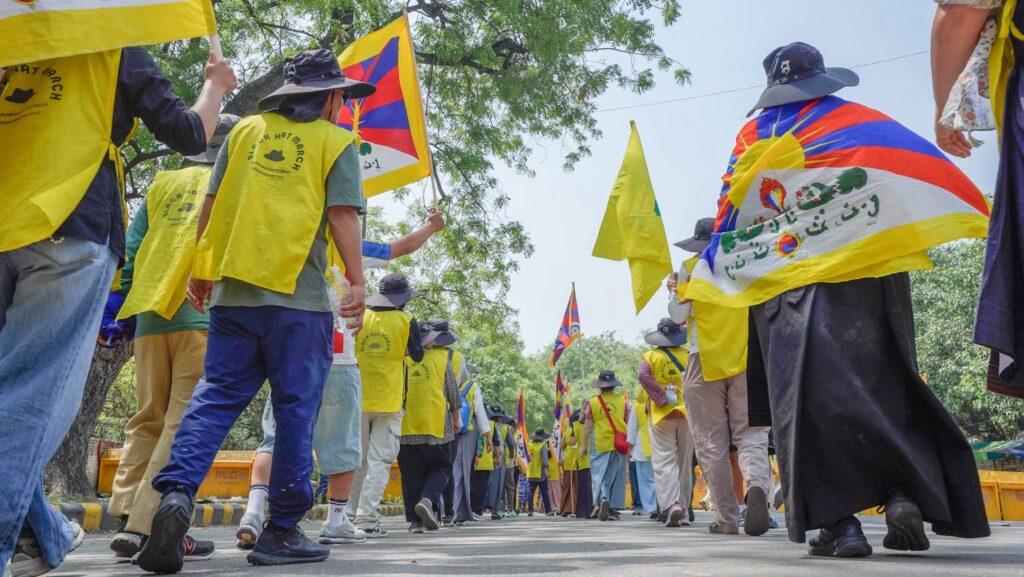
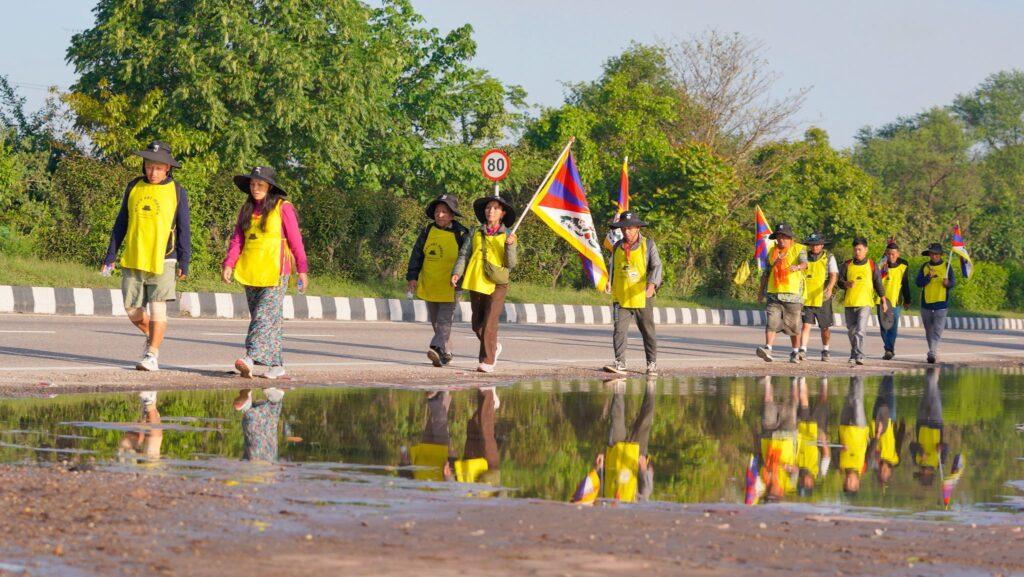
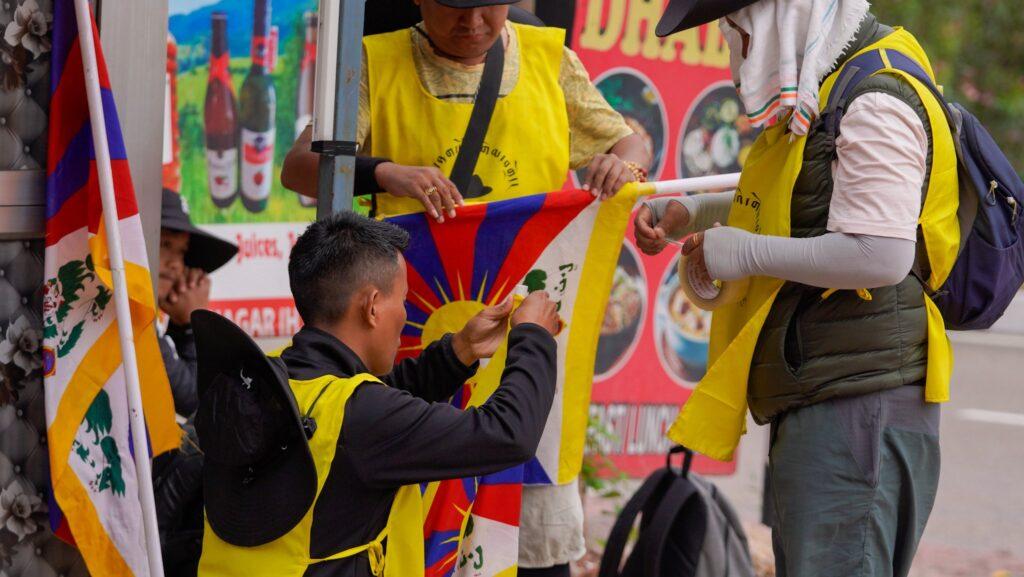
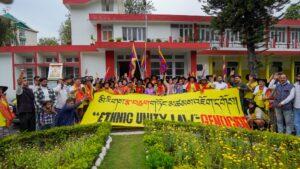
Day 4 of the Black Hat March began early at 5:00 AM with prayer meetings, followed by a briefing from the organizing committee outlining the day’s activities.
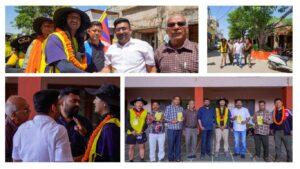
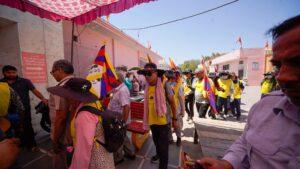
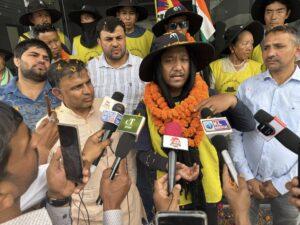
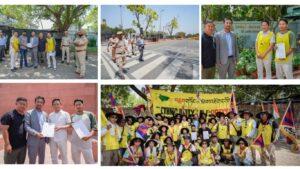
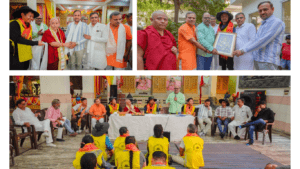
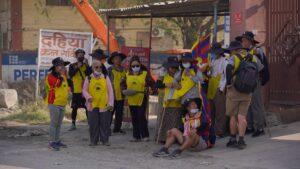
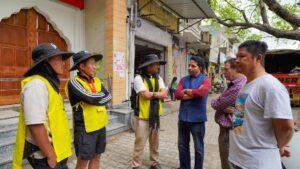
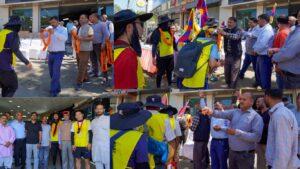
At around 9:30 AM, the marchers were warmly welcomed at the Ghatta Kangra–Mandi border by representatives of the Bir Local Assembly, the Bir Tibetan Settlement Officer, the Chauntra Tibetan Settlement Officer, RTYC Bir, RTYC Chauntra, and Chauntra Zabsang Choekharling Monastery. Special thanks are extended to RTYC Chauntra President, Mr. Yougyal la, for arranging a press meeting for the Black Hat March.

On the way to Bir, Namlang Resort generously hosted tea for all the marchers. Along the route, members of the Tibetan community from Dergey greeted the marchers with heartfelt warmth at Bir market.

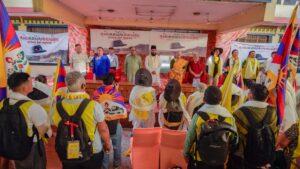
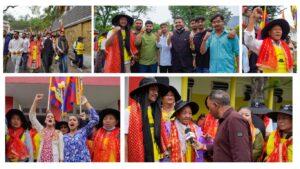
By 1:30 PM, the marchers reached the Bir Tibetan Settlement, where a large gathering warmly received them. The President of the Tibetan Youth Congress addressed the community, stating “We are responding to the Chinese Communist Party that we will continue our struggle to reclaim our country — even if it takes generations.”

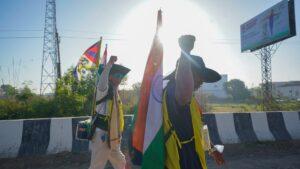
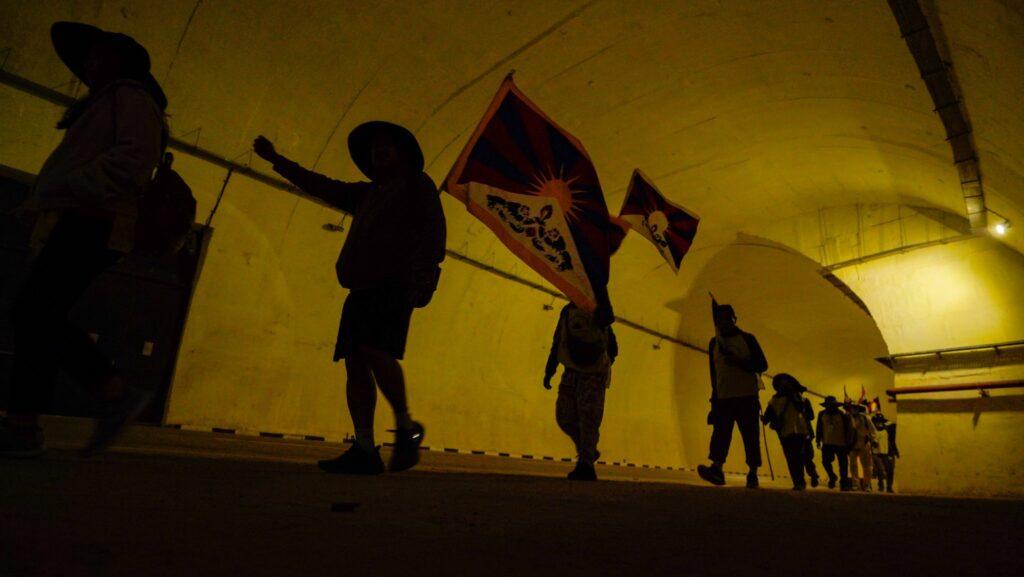
Notably, the marchers reached their destination faster than in the previous three days, driven by the strength of their shared purpose. Every step felt lighter with hearts united in one goal — a Free Tibet.

The day concluded with dinner hosted by RTYC Bir, ending on a note of hope and determination that freedom is not far away.


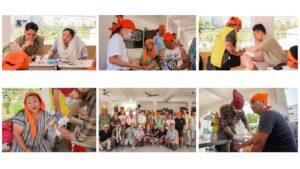
The Tibetan Youth Congress extends heartfelt gratitude to the Bir Tibetan Settlement, RTYC Bir, and RTYC Chauntra for their generous support in providing accommodation and dinner. Special thanks are also due to the Regional Tibetan Health Dispensary for donating medical kits, and to the TCV Suja students for offering relaxing massages to the marchers. Sincere appreciation is extended to Namlang Resort and the Tibetan community of Bir for their kind donations and unwavering support.

Black Hat March | Day 3: From Gopalpur to Tashijong

 Day 3 of the Black Hat March began early at 5:00 AM with a prayer meeting followed by a briefing from the organizing committee. The march commenced from TCV Gopalpur School.

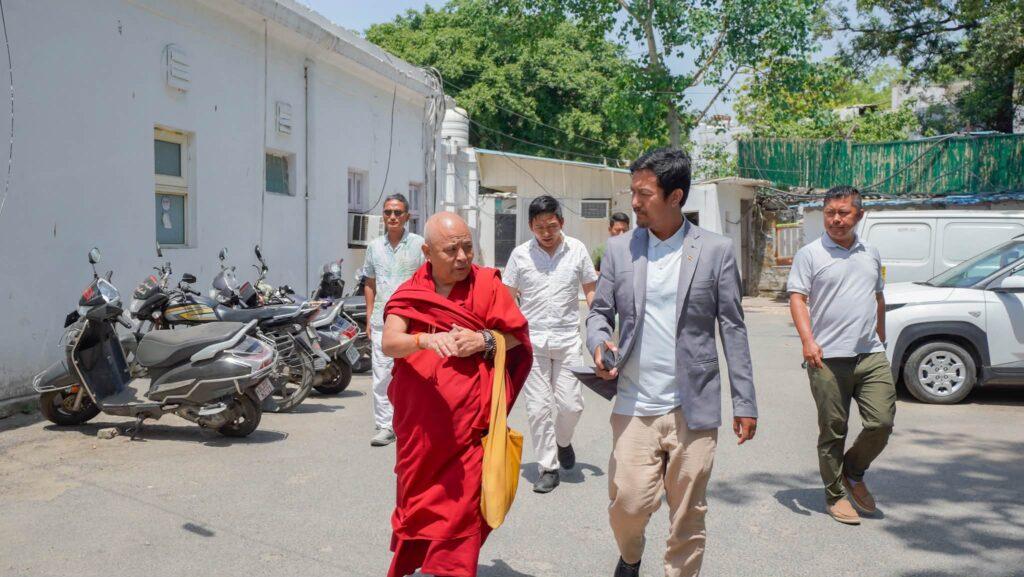
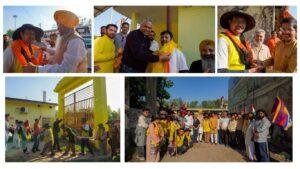
At around 9:00 am, the TYC marchers received a warm welcome from the former MLA of Palampur, Shri Parveen Kumar, along with his colleagues, who honored them with traditional Indian scarves as a gesture of solidarity with the Tibetan movement.


At approximately 11:00 am, the President, Vice President, and Joint Secretary of the Tibetan Youth Congress, along with the RTYC Puruwala President and a few marchers, met with former Union Minister of the Government of India and the third Chief Minister of Himachal Pradesh, Shri Shanta Kumar. A long-time friend of His Holiness the 14th Dalai Lama, Shri Shanta Kumar, even at the age of 91, continues to express steadfast support for the Tibetan cause. The delegation shared the objectives of the Black Hat March and conveyed deep gratitude for his enduring solidarity with the Tibetan people.

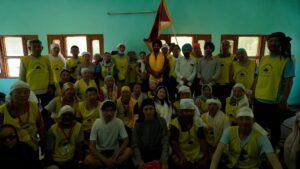
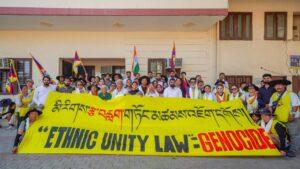
By 4:00 PM, the marchers arrived at Tashijong Tibetan Village, where they were warmly welcomed by the local Tibetan community. The President of the Tibetan Youth Congress addressed the gathering, emphasizing the importance of unity and renewed activism among Tibetans.


The day concluded with a generous dinner hosted by the Tashijong Tibetan community. Exhausted yet fulfilled, the marchers retired for the night with a strong sense of purpose and solidarity.

The Tibetan Youth Congress extends sincere thanks to Shri Shanta Kumar, Shri Parveen Kumar, Tashijong Tibetan community, Tashijong Tibetan Monastery, and the Youth Club of Tashijong for their kindness and support.

Black Hat March | Day 2: From Sarah to Gopalpur

Day 2 – The day began early at 5 AM with a prayer meets and a briefing by the organizing committee. Soon after, the march set off from Sarah Tibetan Studies College, making its way toward TCV Gopalpur via Dadh.
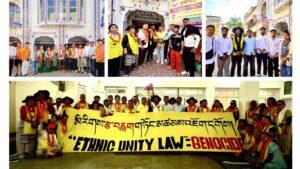
At Dadh, members of the Tibetan community of Chamunda, along with Himalayan Parivar National Secretary Mr. Rishi Kumar Ji and the owner of Hotel Dolphin, warmly welcomed the Tibetan Youth Congress Black Hat marchers, showing their strong support for the cause. By around 5 PM, we reached Tibetan Children’s Village School, Gopalpur, where students lined up to greet the marchers. The school administration kindly arranged high tea and accommodations for the night.
At 6 PM, the President and Vice President of the Tibetan Youth Congress held an engaging talk session with school staff, teachers, and students. They emphasized that students, the future of Tibet, should focus deeply on their education and recognize their responsibility toward the nation’s future.
The day concluded with a school dinner that brought back memories of our own school days, ending on a meaningful and reflective note.
Thank you TCV GOPALPUR , Chamunda Tibetan community, Rishi kumar ji himalayan parivar National Seretary and hotel Dolphin.

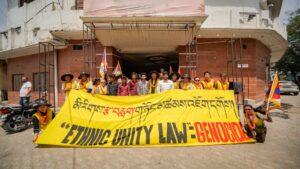
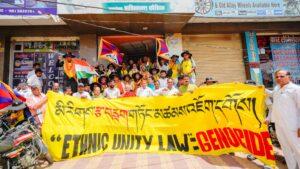
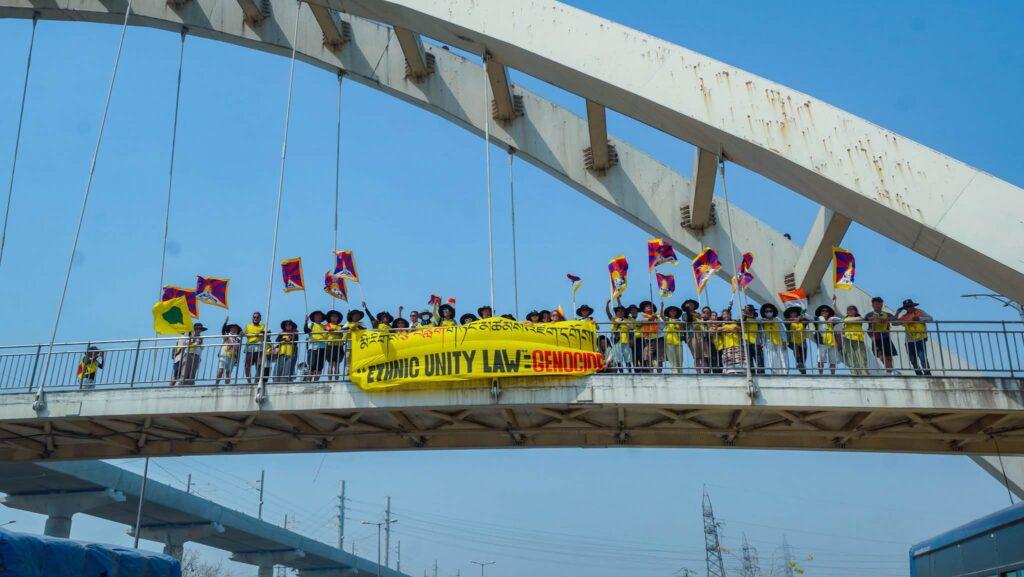
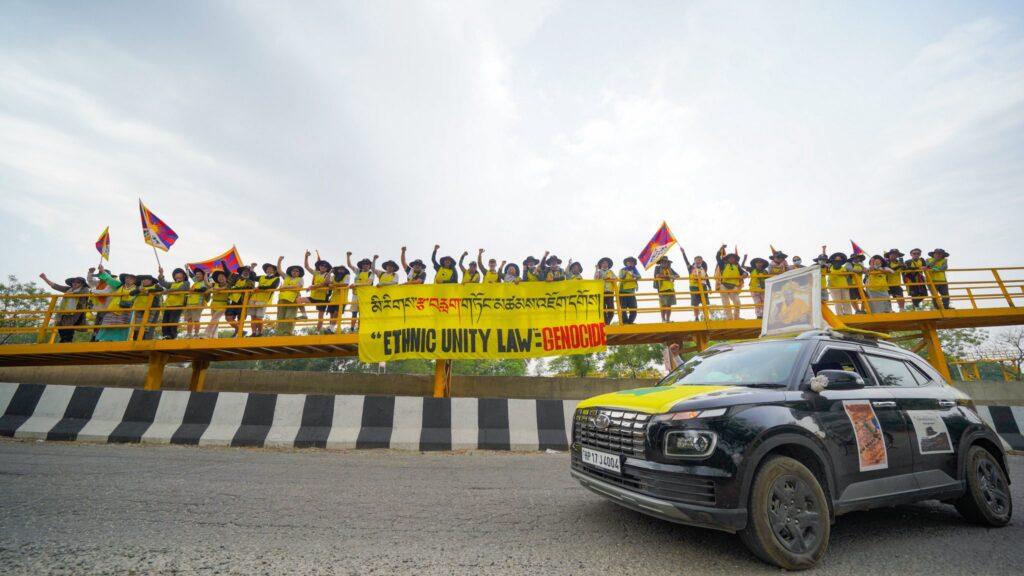
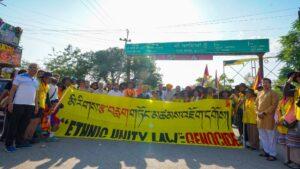
Black Hat March Begins: Standing Against China’s so-called Ethnic Unity Law

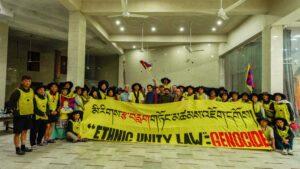
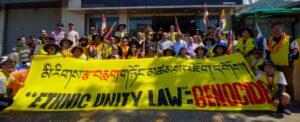
On March 31, 2026, the Tibetan Youth Congress officially launched the Black Hat March on a historically significant day—commemorating the moment when His Holiness The Great 14th Dalai Lama, cabinet members, and thousands of Tibetans, were forced into exile and stepped onto foreign soil as a refugee because of military and illegal occupation of Tibet by the so-called Chinese government.
The opening ceremony was held at Lhagyal-ri, beside the residence of His Holiness the Dalai Lama. The setting carried profound symbolism: on one side stood the residence of His Holiness, representing the living spirit and resilience of Tibet, while on the other side were displayed photographs of Tibetan martyrs who sacrificed their lives for the Tibetan cause.
Black Hat March statement: TIB   ENG    HINDI
The ceremony was graced by distinguished guests, including Chief Guest Mrs. Gyari Dolma, Kalon (Minister) of the Department of Security; Mr. Shashwat Kapoor, General Secretary of the BJP Yuva Morcha; Mr. Ajit Nehria, President of the Indo-Tibetan Association; Member of the Tibetan Parliament and former Tibetan Youth Congress President Mr. Tenzing Jigme; Member of Parliament Lhagyari Namgyal Dolkar; Kungoe Topgyal la; former Tibetan Youth Congress Executive Mr. Penpa Tsering la; and Tibetan Settlement Officer Mr. Kunchok Migmar.
The ceremony began with the singing of the Tibetan and Indian national anthems, followed by a solemn moment of silence to honour and remember the Tibetan martyrs.
  • Tibetan Youth Congress President, Mr. Tsering Chomphel, addressed the gathering and presented the objectives and key demands of the Black Hat March to the public.
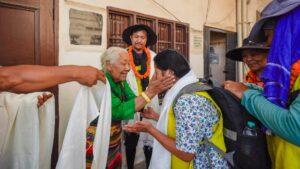
  • Chief Guest Mrs. Gyari Dolma remarked, “It is deeply moving to witness this march at such an important and symbolic location. This is the time for all Tibetans to unite and channel our collective strength more than ever.” She also offered traditional white scarves (khatas) to all the marchers as a gesture of blessing and goodwill.
  • Mr. Shashwat Kapoor and Mr. Ajit Nehria offered heartfelt encouragement and meaningful recognition of our ongoing struggle for Tibet. They expressed their solidarity which not only uplifted our spirits but also reaffirmed the strength and resilience of our movement.


Following the ceremony, Mrs. Gyari Dolma, Mr. Shashwat Kapoor, Mr. Ajit Nehria, Mr. Tenzing Jigme, and Mr. Kunchok Migmar jointly flagged off the march from Lhagyal-ri, marking the commencement of the first day of the Black Hat March.
Upon reaching Gangchen Kyishong, the marchers were received by Honorable Penpa Tsering, Sikyong (President) of the Central Tibetan Administration. He met with the participants, extended his best wishes, and formally flagged off the march from the Gangchen Kyishong gate.
Later in the evening, the marchers arrived at the College of Higher Tibetan Studies (CHTS), Sarah, where they were warmly welcomed by Principal Mr. Passang la and RTYC Sarah.
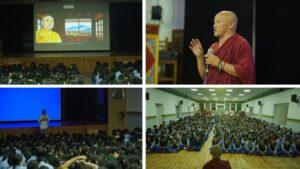
At the end of the day, the Tibetan Youth Congress President delivered an engaging talk to the students of Sarah, highlighting the significance of the Black Hat March and encouraging greater youth participation in the Tibetan movement. The session concluded with an interactive Q&A, fostering meaningful dialogue and reflection among the students.

67th Tibetan National Uprising Day: Standing Against Oppression

On 10th March 1959, waves of desperate hope and terror swept through Lhasa as Tibetans bravely risked everything (lives, families, future) to shield His Holiness the 14th Dalai Lama and fight for the soul of their homeland. This uprising, forever branded with courage and sorrow, still fuels the unyielding spirit at the core of the Tibetan freedom movement.
Today, 10th March 2026, Tibetan hearts unite in peaceful protest marches across the world, each step and chant echoing with longing, outrage, and hope for the homeland they ache to see free. (Video link)
The air at Jantar Mantar in New Delhi pulsed with fierce determination, every heartbeat echoing resistance as the Tibetan Youth Congress led a fervent mass protest. Over 500 Tibetans and their steadfast allies gathered, their voices and very presence a living testament of unwavering solidarity for Tibet’s struggle.
The President of the Tibetan Youth Congress addressed the gathering, joined by several distinguished guest speakers, including Dr Manoj Kumar, National General Secretary of the Indo-Tibet Friendship Society; the former Deputy Speaker of the Tibetan Parliament-in-Exile; former MCD member Rakesh Kumar Ji; Professor Vinay Kumar; and Jagtumba Singh from Bharat Tibet Sahyog Manch. During the programme, organisers’ anguished voices revealed Tibetans’ suffering under Chinese rule, calling for the world to witness this plight. As Ladakhi singer Sonam’s patriotic song soared, emotion swept the crowd, forging tears into vows of commitment.
Meanwhile, at the Chinese Embassy, the Tibetan Youth Congress Central Executive, with RTYC Delhi and RTYC Rohini, held a demonstration. When 24 Tibetan activists were detained, fear and injustice surged through the crowd, showing the high stakes of resistance.

Statement by the Tibetan Youth Congress on the 113th Anniversary of Tibet’s Declaration of Independence

TIBETAN YOUTH CONGRESS STATEMENT
113th Anniversary of Tibet’s Declaration of Independence
(13 February 1913)
On the 113th anniversary of Tibet’s Declaration of Independence, the Tibetan Youth Congress (TYC) once again reaffirms that Tibet has always been an independent nation and shall remain so. Contrary to the false claims propagated by the so-called People’s Republic of China (PRC), Tibet’s historical relationship with neighbouring powers, including the Mongol Khans and later the Ming and Manchu (Qing) emperors, was based on the Preceptor Patron (Chö-yon) relationship. This relationship was one of mutual spiritual and material support and never one of political subordination. At no point did it signify Tibet’s incorporation into China as a sovereign territory.
Following China’s unlawful invasion of Tibet, the PRC constructed a fabricated historical narrative to justify its actions under the guise of “liberation,” falsely asserting that Tibet and China are one nation. However, extensive historical evidence, from Tibet’s imperial period through the early twentieth century, clearly demonstrates Tibet’s status as a distinct and independent country.
A particularly compelling example lies in the reign of His Holiness the 13th Dalai Lama. On 13 February 1913, after the collapse of the Manchu Qing dynasty, His Holiness issued a proclamation declaring Tibet’s independence. This declaration followed years of Chinese military aggression in eastern Tibet and the deployment of Chinese troops to Lhasa under the pretext of safeguarding Tibet. Despite repeated clarifications that Tibet’s relationship with China was spiritual rather than political, Chinese forces attempted to abduct and assassinate His Holiness, which ultimately forced him into exile in India.
After the fall of the Qing dynasty, Tibetans from all social strata successfully expelled Chinese troops from central Tibet. Upon his return to Lhasa, His Holiness the 13th Dalai Lama issued a Five Point Decree. In the fourth point, he clearly stated: “Though not prosperous or technologically advanced like other countries, Tibet is an independent nation living in peace and governed by religious principles.”
Further evidence of Tibet’s independence can be found in the 1888 Sikkim Expedition, as documented in British historical records. In 1890, the British government signed a treaty with China concerning the Tibet-Sikkim border and trade relations. This treaty later became ineffective when the British realized that Tibet was not bound by it and that China had no authority to enforce it within Tibet. This realization implicitly acknowledged Tibet’s independent status.
Even the so-called Seventeen Point Agreement of 1951 serves as evidence of Tibet’s independence, as China deemed it necessary to negotiate and obtain signatures from Tibetan representatives rather than exercising sovereign authority.
Tibet’s system of governance has always been unique, with His Holiness the Dalai Lama serving as both the spiritual and temporal leader. Therefore, religion plays a central role in Tibetan political and social life. In 2007, the Chinese State Administration of Religious Affairs issued Order No. 5, asserting state control over the recognition of reincarnated Tibetan lamas. This order requires government approval for religious reincarnation and represents a direct interference in Tibetan Buddhism.
In 1995, Chinese authorities abducted the 11th Panchen Lama, Gedhun Choekyi Nyima, and appointed a state-selected alternative. This act was intended to control the future recognition of the Dalai Lama’s reincarnation and further undermines Tibetan religious freedom under the watch of the international community.
Tibet’s struggle for independence is firmly grounded in international law, particularly the right to self-determination as enshrined in the Charter of the United Nations and the International Covenant on Civil and Political Rights. The Tibetan people, as a distinct nation with a unique history, culture, language, and governance system, are entitled to freely determine their political status and pursue their economic, social, and cultural development without external coercion.
The Tibetan Youth Congress reiterates that the Tibetan freedom movement is fundamentally non-violent and rooted in democratic values, justice, and respect for human rights. To the United Nations, its member states, parliamentarians, international organizations, supporters of Tibet, democratic nations, political activists, and environmentalists, we express our hope that you will continue to stand in solidarity with the Tibetan cause. We urge the international community to acknowledge Tibet’s historical status, to hold the People’s Republic of China accountable for its violations of international law, and to work collectively to end the suffering of the Tibetan people.
On this solemn anniversary of Tibet’s Declaration of Independence, the Tibetan Youth Congress declares that it will not bend under Chinese oppression and will continue its peaceful and determined struggle for the restoration of Tibet’s independence.
ONE DAY TIBET WILL BE FREE, VICTORY OF TIBET
Tibetan Youth Congress

Tibet Advocacy Alliance–India Engages Indian Parliament on Tibet Issues

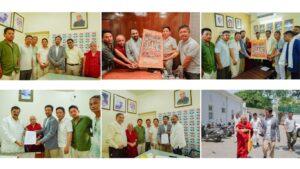
During the Indian Parliament’s winter session, Tibetan Youth Congress General Secretary Mr. Tenzin Lobsang, together with representatives from various Dharamshala-based NGOs, participated in Tibetan Advocacy Week in New Delhi.

As part of the initiative, the delegation held meetings with several Honourable Members of Parliament, where they presented key concerns of the Tibetan community. They also formally submitted a set of proposed agendas and respectfully urged the MPs to raise these issues during the ongoing parliamentary session, emphasizing the need for stronger support and attention to Tibet-related matters.


The six day Advocacy was held to foster strategic and coordinated advocacy efforts to strengthen Indian parliamentary engagement on Tibet-related issues and further stress on four key request:

  1. To Recognise and reaffirm that Tibet was historically an independent nation, and to urge them to make a statement in Parliament advocating continued support for the Tibetan people’s struggle for freedom, justice, and their right to self-determination.
  2. To Honour His Holiness the 14th Dalai Lama on his 90th as global icon for peace and humanity. We urge the parliament members to make a statement in the parliamentary session acknowledging His Holiness’s unparalleled contributions to global peace and the promotion of India’s ancient civilisational values and the Government of India to publicly recognise and affirm support for Tibetan religious rights, including the Gaden Phodrang Trust’s sole authority to recognise the future reincarnation of the Dalai Lama, and no one else has any such authority to interfere in this matter.
  3. To Advocate for the protection of Tibetan culture and language: Call for the immediate abolition of China’s colonial boarding school systems in Tibet. We urge you to call upon the Government of India to officially raise this critical human rights issue in all bilateral and multilateral meetings with Chinese government representatives, in line with the urgent calls from UN Special Procedures and Committees.
  4. To Recognise the strategic and ecological significance of Tibet and its plateau: Tibet, often referred to as the Third Pole, is home to the largest reserve of freshwater outside the Arctic and Antarctic, feeding the major rivers of Asia, including Brahmaputra, Indus and Sutlej, and given its fragile ecological spheres, needs protection. We urge you to Press the Government of India to raise official concerns about China’s construction of the world’s largest hydropower project on the Brahmaputra River in Tibet, close to the Indian border. Call upon the relevant Ministries to support the Tibetan people’s call for an immediate moratorium on environmentally damaging projects in Tibet and advocate for the inclusion.


Tibetan Youth Congress Official Rebuttal to the Recent Statement Issued by Gyaltsen Norbu at State symposium in Shigatse

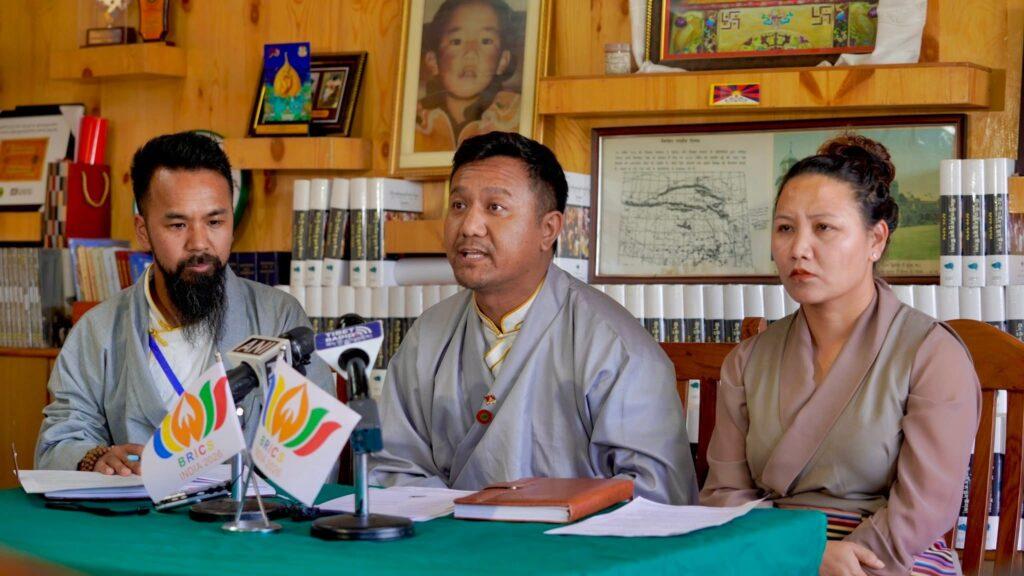
Press Conference: Tibetan Youth Congress Official Rebuttal to the Recent Statement Issued by Gyaltsen Norbu at State symposium in Shigatse.

The Tibetan Youth Congress strongly rejects the recent statement made by the Chinese-appointed monk at a state-sponsored symposium, which claimed that the reincarnations of the Dalai Lama and Panchen Lama must follow Chinese law and receive approval from Beijing. TYC condemns this assertion as a blatant political interference in Tibetan religious traditions and an attempt to legitimize state control over reincarnation.

TYC reaffirms that the recognition of Tibetan spiritual leaders is a sacred religious matter, free from external coercion, and firmly opposes any effort by the Chinese government to impose authority over Tibetan faith and identity.

Rebuttal statement(Eng) Rebuttal statement (Tib)


TIBETAN YOUTH CONGRESS (TYC) PRESIDENT ATTENDED THE 10TH GENERAL BOARD MEETING OF THE TIBETAN NATIONAL DEMOCRATIC PARTY OF TIBET AS THE SPECIAL GUEST OF HONOUR.

On 24 November 2025, Tibetan Youth Congress (TYC) President Tsering Chomphel attended the 10th General Board Meeting of the Tibetan National Democratic Party (NDPT) as the Special Guest of Honour. During the gathering, the TYC President delivered a speech highlighting the long-standing relationship between NDPT and the Tibetan Youth Congress, emphasizing that the progress of every organization is the result of the dedication and collective efforts of its executive members and general members. He reaffirmed that the Tibetan Youth Congress remains committed to supporting NDPT, as it has consistently done in the past, and will continue to do so in the future.
As part of the program, the Tibetan Youth Congress President also presented several awards in recognition of the contributions made in support of NDPT. The event concluded successfully with a sense of unity and shared purpose.

TYC NORTH AMERICA TOUR


The Tibetan Youth Congress President Gonpo Dhundup la and Joint Secretary Tsering Choephel la, embarked on a comprehensive tour of North America on March 7, 2025. The primary objective of the tour was to engage with Tibetans in various regions, encourage their active participation in the Tibetan movement, and strengthen TYC chapter activities.


During the tour, TYC delegation participated in several significant events, including the 66th Tibetan National Uprising Day program at the United Nations Headquarters in New York on March 10, where the President delivered a public talk. They also delivered public talks in various cities, including Boston on March 24, Minnesota on March 30, Chicago on April 1, Wisconsin on April 3, Portland on April 5, and Seattle on April 6. In Seattle, they met with former Regional Chapter members to revitalize and strengthen the chapter.


President and the Joint secretary also engaged with Sunday school students in Minnesota and San Francisco, organizing awareness talks to educate them about the Tibetan cause. They also held public meetings in Utah on April 16, Colorado on April 19, and Washington D.C. on April 23, where they met with Representative Kungo Namgyal Chokdup and former TYC Centrex member Kungo Buchung K. Tsering, Vice President of the International Campaign for Tibet. Additionally, they visited the office of Congressman Jim McGovern, a long-time supporter of Tibet.


In the evening of April 23, a public meeting was held in Washington D.C., attended by former Centrex members and civil servants of the Central Tibetan Administration. The delegation also organized public meetings in New York on April 26 and Philadelphia on April 30. During their visit to Toronto on May 4, they held two public meetings and met with Members of Parliament who have been long-time supporters of Tibet’s just cause.


Throughout the two-month tour, the delegation highlighted the critical situation inside Tibet, emphasizing the importance of strengthening unity amongst Tibetans from the three traditional regions. They also briefed on TYC’s campaign activities aimed at amplifying the sufferings of Tibetans inside Tibet.


After a successful tour, the delegation returned to India on May 14, 2025, having strengthened TYC’s presence in North America and reinforced the organization’s commitment to the Tibetan cause.

Back To Top