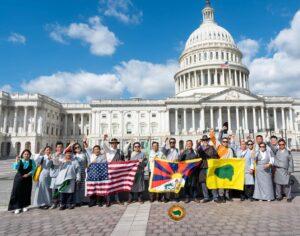
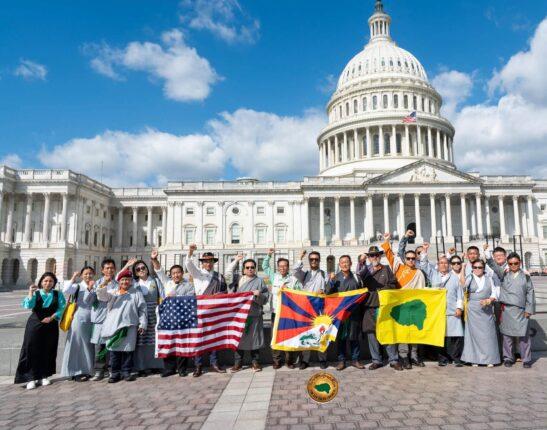
Ten days before the arrival of the Chinese dictator Xi Jinping in the United States, on September 14, 2026, under the organisation of the Tibetan Youth Congress, approximately 23 former central TYC executive members and members of the Regional Tibetan Youth Congress chapters based in New York, New Jersey and Washington D.C., under the leadership of Central Tibetan Youth Congress President Tsering Chophel, were divided into four groups and made special visits to approximately 45 offices of the U.S. Senate and House of Representatives, submitting written petitions on four key demands:
First, that when President Trump meets with Xi Jinping, the U.S. side must raise the issue of Tibet without fail.
Second, that the self-immolation of patriotic martyr Lobsang Rangzen (Lobga Rangzen)was carried out for the restoration of Tibetan independence, and that the over 160 Tibetans who have self-immolated to date all represent a political issue of the core Tibetan freedom struggle.
Third, that the so-called “Law on Promoting Ethnic Unity and Progress” is designed to eradicate Tibetan culture and people, and the U.S. government must talk for the withdrawal of this legislation.
Fourth, that the White House must officially recognise Tibet as a historically independent nation that has been invaded and occupied by China.
The lobbying campaign effectively presented these four key demands to U.S. congressional offices.
In accordance with the aspirations, last wishes, and immense sacrifices of Pawo Lobga Rangzen and the brave pawos and pamos of Tibet for the restoration of Tibetan independence—and in keeping with their testament that Tibet’s future path lies in the restoration of independence—the young Tibetans who voluntarily participated in this TYC-organised lobbying campaign have contributed another chapter to the continued march toward Tibetan independence.
During the campaign, many congressional staff members expressed their appreciation, warmly received the petition documents, and demonstrated considerable interest in the demand for the restoration of Tibetan independence. These encouraging interactions offered renewed hope for advancing the Tibetan cause on the international stage and strengthened the resolve and courage of those who participated in the lobbying campaign.