Black Hat March | Day 11 – 20 : From Rupnagar to Samalkha

Day 11:
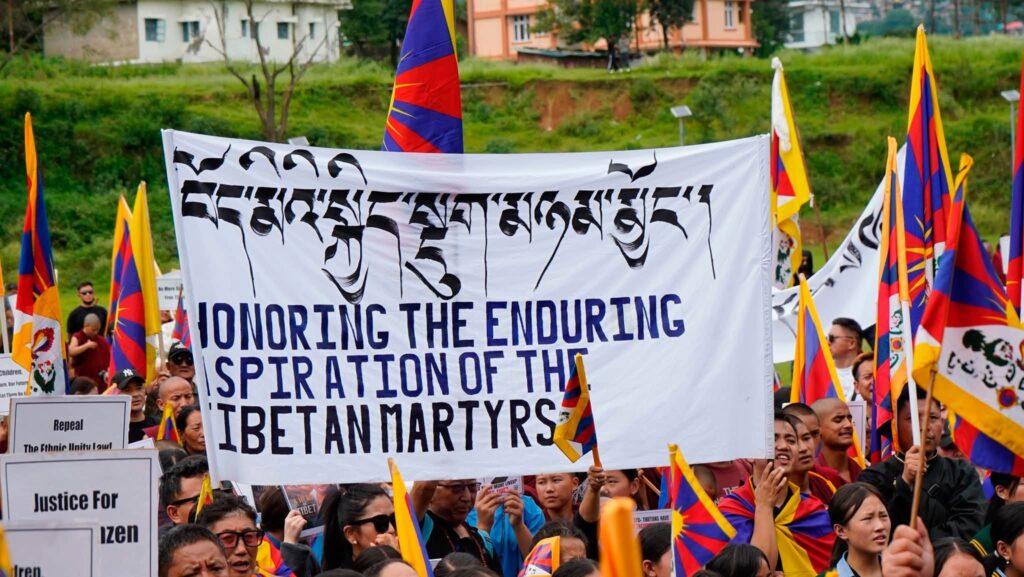
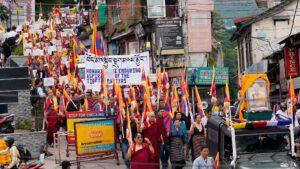
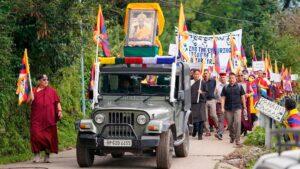
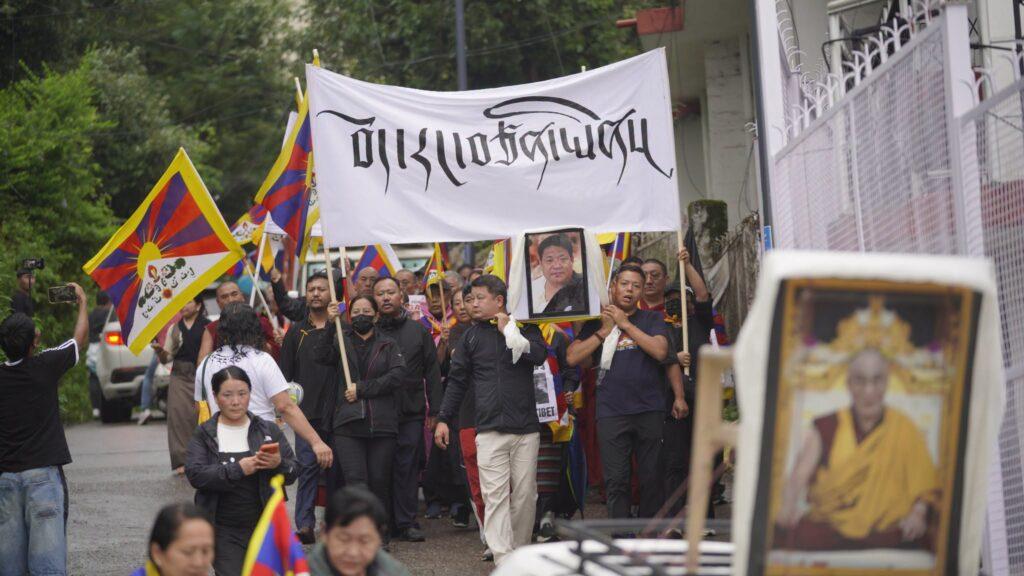
The march began early at around 5:00 AM as the marchers proceeded from Rupnagar to Kurali. The day started with prayers, followed by a briefing from the organizing committee outlining the day’s activities.

At around 1:00 PM, the marchers were warmly welcomed in Kurali by RSS members led by Shri Ravinder Ji, Shri Vikram Ji, and Shri Harvinder Singh Rathore (Punjab University DESMDRC Student Front Party Chief). The Tibetan Youth Congress addressed the press in Kurali, sharing updates on the Black Hat March and expressing heartfelt gratitude to India for its continued support.

The day concluded with a night stay arranged by the RSS Kurali team, along with a pure vegetarian dinner. The spirit of the day was captured in the words: “Under the burning sun, our bodies may tire, but our spirit continues to shine brighter.”


Day 12:
The marchers began at 4:00 AM from Kurali with prayers and a briefing. Upon reaching Chandigarh, they were warmly welcomed by RTYC Chandigarh, and Raja Mohali also visited to welcome the marchers.

At around 3:00 PM, demonstrations were held at Punjab University and later in Sector 17, with strong support from RSS members including Shri Er. Charan Ji, Shri Sumit Kumar Ji, Professor Tomar Ji (Sanskrit Department, PU), Ashesh Ji (PhD), and Professor K.P. Singh Ji.

RTYC Chandigarh President also invited Kamaljit Singh Panchhi, President of the National Human Rights and Anti-Corruption Force Chandigarh, along with members who stood in solidarity with the Tibetan cause.

At Sector 17, RTYC Puruwala and RTWA Puruwala visited the marchers, offering scarves and distributing water and fruits. Despite physical exhaustion, the day concluded successfully.


Day 13:
After marching continuously for 12 days, the marchers took a well-deserved rest. The organizing committee arranged a full medical check-up with the support of RTYC Chandigarh.

Heartfelt thanks were extended to Dr. Sandup Dorjee and the SRH Charitable Diagnostic team, along with special gratitude to Dr. Tenzin Thai, President of RTYC Chandigarh.
Lunch was served at a Gurudwara, where the marchers respectfully shared a simple vegetarian meal. The day ended with much-needed rest and reassurance that all marchers were in good health.


Day 14:
Today marked the longest march so far, covering approximately 53 km. Beginning at 4:00 AM with prayers and a briefing, the marchers reached Ambala, Haryana, around 5:30 PM.

They were warmly welcomed by ABVP student members under the leadership of Yogesh Ji at Ambala Cantt. At the Gurudwara, BTSM President Shri Narender Ji and Vice President Arun Ji offered fruits. BTSM Haryana President Shri Sushil Kumar Ji and his team welcomed the marchers with garlands and flowers.

The Tibetan Youth Congress President addressed the press and media, expressing gratitude to India and its people. RTYC Paonta Sahib and RTWA Paonta Sahib also visited in support. The day concluded with dinner and rest.


Day 15:
The march began at 5:00 AM, covering approximately 22 km to Shahbad, reaching around 12:30 PM at Shri Shakambari Devi Mandir.

Arrangements were made by Vishwa Hindu Parishad Shahbad with the support of Shri Manesh Bhagat Ji, Pandit Shri Rajesh Sharma Ji, Shri Santpal Bhatia Ji, Shri Raja Kumar Bhatia Ji, Shri Surender Jain Ji, Shri R.D. Gupta Ji, Shri Marander Madan Ji, Shri Rampal Ji, and Shri Rakesh Khanna Ji.

The marchers were warmly welcomed with garlands and flower petals. The Tibetan Youth Congress President addressed the media, and due to intense heat, the marchers rested early.


In today’s highlight, in response to media questions during the press, the TYC President stated: “Even though the sun’s heat burns us, it will never weaken our courage and determination in our struggle for Tibet.”


Day 16:
The march began at 4:00 AM with prayers and a briefing. along the way at 9:00 am, Tibetan activist Jamyang la visited the marchers from Dehradun, expressing gratitude for their dedication and determination toward the national struggle.

By 1:30 PM, the marchers reached Kurukshetra, where they were welcomed by ABVP students led by Subham Sharma Ji. At around 2:30 pm, members of BTSM Kurukshetra—Sushil Ji, Ravinder Ji, and Vikas Ji—also extended their support and shared words of encouragement for the tibetan struggle.


An emotional highlight was the visit of an elderly couple from Paonta Sahib Tibetan settlement, encouraging the marchers with the spirit of determination for “Bodh Rangzen.”
The day concluded with a simple meal, and special thanks were extended to the Yarloong team from New York City for sponsoring meals.


Day 17:
The day began at 4:00 AM with prayers and a detailed briefing. The marchers reached Nilokheri, Haryana around 12:00 PM and were welcomed by ABVP students under the guidance of Abshak Rana Ji and youth leader Lovpratap Singh.

With the support of senior journalist Ahuja Ji, a press briefing was arranged at Bajrang Dal Dharamshala. Ahuja ji also recited a poem to uplift the spirits of the marchers and encourage dedication to the national cause.

The Tibetan Youth Congress President addressed the media, and the day concluded with discussions and a shared meal.


Day 18:
The march continued from early morning at 4:00 AM. By midday, the marchers reached Karnal and stayed at Jaat Bhawan, around 12 pm where they were warmly received by ABVP Karnal guided by Abhishek Rana Ji and leadership of Deepak Yadav Ji and Lovpratap Ji.
They were also welcomed by BTSM Haryana under Shri Sushil Kumar Ji, along with Rajvir Palawan Ji and his group.

A press briefing was conducted by the Tibetan Youth Congress President and Joint Secretary Ngawang Paljor on Black Hat March and current India-China relations.


Day 19:
The marchers began at 4:00 AM, covering around 35 km before reaching Panipat by 4:00 PM. They were welcomed by Shri Gulab Ji (BTSM Panipat), BJP’s Neeraj Ji, Suhil Verma of ABVP, and students from DS (PG) College.
A press conference was held at DS College addressing about purpose and goal of the Black Hat March, followed by a meeting with the Principal and administration.


All programs were coordinated under the guidance of Former Deputy Speaker of TPiE, Acharya Yeshi Phuntsok La. Night stay was arranged by BTSM and ABVP Panipat.

A Heartfelt thanks to all Indian supporters, and special gratitude to Former Deputy Speaker of TPiE, Acharya Yeshi Phuntsok La for his continued support of TYC campaigns across India.

Day 20:
The day began at 5:00 AM with prayers and a briefing. By 12:00 PM, the marchers reached Samalkha, where they were warmly welcomed by local leaders and residents, later by ABVP Samalkha and BTSM Haryana, led by Shri Gulab Singh Ji and the Samalkha team at the BJP office in Samalkha. A welcome program was organized and hosted by Shri Neeraj Ji (BJP karyakarta), featuring speeches by Former Deputy Speaker of TPiE, Acharya Yeshi Phuntsok La, BTSM Haryana’s Shri Gulab Ji, and Shri Sushil Ji, who delivered the welcome address. The President of the Tibetan Youth Congress, Tsering Chomphel, also addressed the gathering, speaking about the purpose of the Black Hat March and the critical situation inside Tibet.

After the program, the TYC President briefed the media and press about the Black Hat March. BTSM and ABVP Haryana, led by Shri Sahil Verma Ji, arranged high tea for all the marchers, and night stay was also organized by them.


Later, around 5:00 PM, the TYC President visited the Hindu Temple at Chulkana Dham, where he was warmly received by the temple authorities. He also visited the RSS Haryana office premises and met with Shri Raj Kumar Ji and Shri Vijay Ji, administrators of the RSS Haryana office. The RSS Haryana campus is one of the largest premises in India.
Special thanks were extended to Shri Gulab Singh Ji (BTSM Haryana), Shri Sahil Verma Ji (ABVP), Shri Neeraj Ji (BJP), and Shri Hari Om Ji for their support and for making all the arrangements for the TYC Black Hat March over the two days in Panipat and Samalkha.


Black Hat March | Day 10 : From Kiratpur Sahib to Rupnagar

Early at 5:00 AM with prayers, followed by a briefing from the organizing committee about the day’s program, the marchers reached our destination in Rupnagar district around 4:30 PM, where they received a warm welcome from Shri Iqbal Singh Lalpura (former Chairman of the National Minority Commission, India) and the RSS Ropar team led by Shri Amit Kumar ji.
The marchers also conducted a press briefing in Ropar, sharing the purpose of our march and raising awareness about our cause.
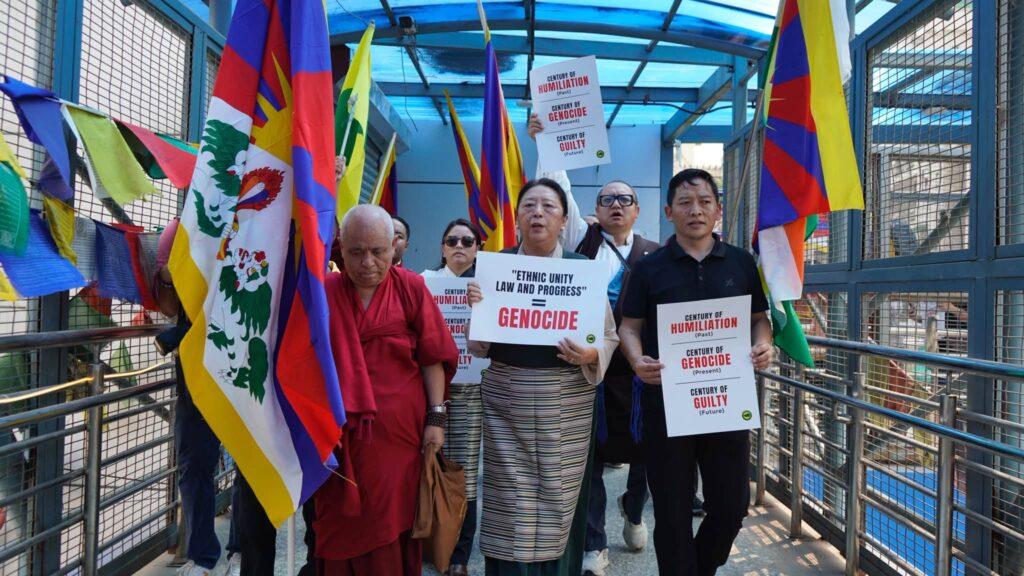
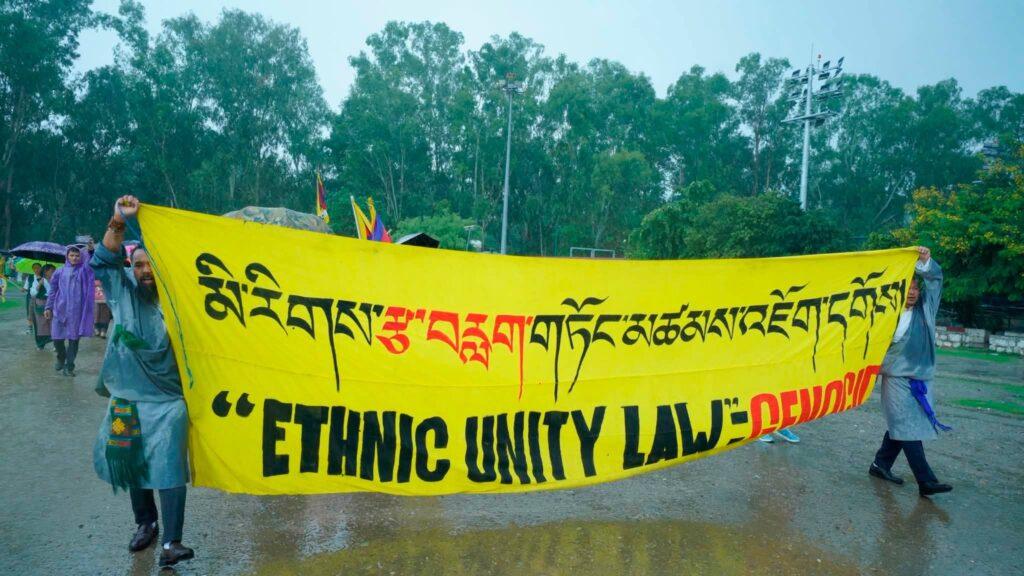
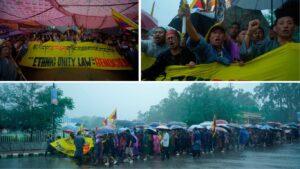
In the Rupnagar market, they carried out a peaceful demonstration against the “Ethnic Unity Law = Genocide,” highlighting our concerns and seeking public attention. The RTYC Jalandhar Student Working Committee visited Rupnagar to express heartfelt gratitude to all the marchers for their unwavering determination and commitment to the nation’s cause.
Night stay was arranged at Banglamukhi Mandir by Ropar members. The day concluded with meaningful conversations over traditional Tibetan food, thenthuk, with RSS members. The marchers shared the story of their national struggle, and RSS members expressed their solidarity with the cause.

Black Hat March | Day 9 : From Bilaspur to Kiratpur Sahib

Day 9 of the Black Hat March began slightly later than usual due to heavy rainfall in Bilaspur. The day commenced with prayers, followed by a briefing from the organizing committee outlining the plan for the journey ahead.

Once the rain subsided, the marchers resumed their journey towards Kiratpur Sahib, covering a distance of approximately 38 kilometers. On this ninth day, the determination and resolve of the marchers were clearly evident, with their pace reflecting a renewed sense of urgency and purpose.

At around 2:30 PM, the marchers reached their destination at Shiv and Ram Mandir in Kiratpur Sahib, where they were warmly received by members of the Rashtriya Swayamsevak Sangh, including Shri Joshi ji, Shri Kumar ji, and their team. The President of the Tibetan Youth Congress addressed members of the press and media, sharing the purpose and spirit behind the Black Hat March.


Throughout the day, powerful slogans echoed in unison, expressing the collective belief that one day Tibet will be free. The march concluded with a sense of accomplishment and continued determination.

The marchers rested for the night at the Shiv Mandir, the day concluded with a simple and pure vegetarian meal, providing comfort after a long and challenging journey.


Black Hat March | Day 8 : From Sundernagar to Bilaspur

The day began as usual with morning prayers, followed by a briefing from the organizing committee outlining the day’s activities. With determination and unity, the marchers set out on a long and demanding journey, walking for nearly 11 hours and covering more than 40 kilometers.

At around 4:00 PM, the marchers reached Bilaspur, where they received a warm welcome from local youth, who thoughtfully arranged refreshing tea. Shortly thereafter, a protest campaign was organized in the Bilaspur market, where members of the local community joined in strong solidarity, raising their voices against the so-called “Ethnic Unity Law ” which equals to genocide of the tibetans and other occupied countries under China. The collective participation reflected growing awareness and support for the Tibetan cause.


A press meeting was also held at the Circuit House, further amplifying the message of justice, human rights, and the urgent need to address the ongoing situation in Tibet. Throughout the march, powerful slogans such as “Bharat-Tibet mitrata amar rahe” echoed in the air, energizing the marchers and reinforcing a shared sense of purpose and resilience.

The Tibetan Youth Congress expresses its deep gratitude to the Rashtriya Swayamsevak Sangh youth members of Bilaspur—Shri Shiv Kumar, Shri Rakesh, Shri Rupendra Piyush, Shri Pradyuman, Shri Rahul, Shri Karthik, Shri Surya, Shri Munish, Shri Rampal—and the entire Bilaspur community for their generous support and unwavering solidarity with the Tibetan cause.

The day concluded with a restful stay at the Government Bungalow (MCD Hall), surrounded by Tibetan and Indian friends. It was a day marked by unity, endurance, and shared commitment—one that will remain a lasting source of inspiration for all involved.


Black Hat March | Day 7 : From Mandi to Sundernagar

Day 7 of the Black Hat March began early at 5:00 AM, as usual. However, unlike other days, it commenced with the solemn chanting of Mani prayers in remembrance of the late Ngari Rinpoche Tenzin Choegyal, marking the 49th day since his passing. The prayers were offered with deep reverence, reflecting on his spiritual legacy and the profound impact he had on the Tibetan community. Following this moment of reflection, the organizing committee briefed the marchers before they commenced their journey towards Sundernagar.

At around 12:30 PM, the marchers were warmly welcomed upon arrival in Sundernagar. Members of the taxi union, jeep union, local businessmen, and residents greeted them with flower malas (flower garland) and showered them with petals. Under the leadership of Krishna Chand, Durga Dutt (Palu Sharma), Tara Chand, and Balak Ram (Tek Chand), the local community came together in strong support of the Tibetan Youth Congress Black Hat March campaign and the Tibetan cause. They also expressed deep appreciation for the courage and determination of the marchers.


After a brief halt of about an hour, the marchers proceeded to their place of stay. Notably, the pace of the march was faster than in previous days, reflecting the growing strength and determination of the participants. Despite continued efforts by China to suppress the Tibetan people, the resolve of the marchers remains strong with each step.

In the evening, the marchers were served a traditional Tibetan dinner of thenthuk, prepared by the team’s cook. The meal evoked memories of their forefathers and provided a comforting sense of home after a long and demanding day.


Black Hat March | Day 6 : From Padhar to Mandi

Day 6 began early at 5:00 AM with prayers, followed by a briefing from the organizing committee outlining the day’s program. Shortly thereafter, the march commenced.

On the way to Mandi, the marchers were graciously hosted for lunch at a Gurudwara by members of the Sikh community, who warmly served meals to all.

At around 2:00 PM, the marchers arrived in Mandi, where they received a heartfelt welcome from several dignitaries and members of the local Tibetan community. Among those present were Lhamo Choedon, Coordinator Secretary, Mandi Tibetan Settlement Office; Ngawang Dhondup, former President, BRDL Mandi; Yeshi Dorjee, Vice President, LTA Mandi; and Tashi Tsewang and Tashi Phuntsok, Members of LTA Mandi.

The marchers were also welcomed by members of the Tibetan community in Mandi, including TSO Pema, as well as Shri Danesh Kumar from the Indo-Tibetan Friendship Society, Mandi, who kindly facilitated a press briefing on the Black Hat March campaign.

The day concluded with a night stay at Guru Gobind Singh Gurudwara in Mandi, where the marchers were served a wholesome meal of rajma chawal, bringing the day to a warm and fulfilling close.


Black Hat March | Day 5: From Bir to Padhar

The fifth day of the Black Hat March commenced at 5:00 AM with prayers, followed by a briefing from the organizing committee on the day’s planned activities.

Although there were no Tibetan settlements along the route, the marchers felt a strong sense of support from well-wishers between Bir and Padhar as they continued their journey through Himachal Pradesh.

On the way to Padhar, the marchers had the opportunity to interact with members of the press and media. This engagement was made possible with the support of former Deputy Speaker Kungo Acharya Yeshi Phuntsok, Shri Raj Thakur (ITFS member and businessman), and RTYC Chauntra President Sonam Yougyal.

One powerful reflection from a second-generation marcher deeply resonated with all:

“Why did I join the Black Hat March? Because I am concerned that if we do not continue to struggle for our cause, the new generation may forget our nation’s cause. That is why I joined this campaign, and my children will join in the future. This has become an example for them — a moment of pride.”

Despite facing a thunderstorm and heavy rain, the marchers’ spirits remained unshaken. The day’s journey concluded successfully upon reaching Padhar, marking another determined step forward in the movement.

Black Hat March | Day 4: From Tashijong to Bir

Day 4 of the Black Hat March began early at 5:00 AM with prayer meetings, followed by a briefing from the organizing committee outlining the day’s activities.
At around 9:30 AM, the marchers were warmly welcomed at the Ghatta Kangra–Mandi border by representatives of the Bir Local Assembly, the Bir Tibetan Settlement Officer, the Chauntra Tibetan Settlement Officer, RTYC Bir, RTYC Chauntra, and Chauntra Zabsang Choekharling Monastery. Special thanks are extended to RTYC Chauntra President, Mr. Yougyal la, for arranging a press meeting for the Black Hat March.

On the way to Bir, Namlang Resort generously hosted tea for all the marchers. Along the route, members of the Tibetan community from Dergey greeted the marchers with heartfelt warmth at Bir market.

By 1:30 PM, the marchers reached the Bir Tibetan Settlement, where a large gathering warmly received them. The President of the Tibetan Youth Congress addressed the community, stating “We are responding to the Chinese Communist Party that we will continue our struggle to reclaim our country — even if it takes generations.”

Notably, the marchers reached their destination faster than in the previous three days, driven by the strength of their shared purpose. Every step felt lighter with hearts united in one goal — a Free Tibet.

The day concluded with dinner hosted by RTYC Bir, ending on a note of hope and determination that freedom is not far away.


The Tibetan Youth Congress extends heartfelt gratitude to the Bir Tibetan Settlement, RTYC Bir, and RTYC Chauntra for their generous support in providing accommodation and dinner. Special thanks are also due to the Regional Tibetan Health Dispensary for donating medical kits, and to the TCV Suja students for offering relaxing massages to the marchers. Sincere appreciation is extended to Namlang Resort and the Tibetan community of Bir for their kind donations and unwavering support.

Statement by the Tibetan Youth Congress on the 113th Anniversary of Tibet’s Declaration of Independence

TIBETAN YOUTH CONGRESS STATEMENT
113th Anniversary of Tibet’s Declaration of Independence
(13 February 1913)
On the 113th anniversary of Tibet’s Declaration of Independence, the Tibetan Youth Congress (TYC) once again reaffirms that Tibet has always been an independent nation and shall remain so. Contrary to the false claims propagated by the so-called People’s Republic of China (PRC), Tibet’s historical relationship with neighbouring powers, including the Mongol Khans and later the Ming and Manchu (Qing) emperors, was based on the Preceptor Patron (Chö-yon) relationship. This relationship was one of mutual spiritual and material support and never one of political subordination. At no point did it signify Tibet’s incorporation into China as a sovereign territory.
Following China’s unlawful invasion of Tibet, the PRC constructed a fabricated historical narrative to justify its actions under the guise of “liberation,” falsely asserting that Tibet and China are one nation. However, extensive historical evidence, from Tibet’s imperial period through the early twentieth century, clearly demonstrates Tibet’s status as a distinct and independent country.
A particularly compelling example lies in the reign of His Holiness the 13th Dalai Lama. On 13 February 1913, after the collapse of the Manchu Qing dynasty, His Holiness issued a proclamation declaring Tibet’s independence. This declaration followed years of Chinese military aggression in eastern Tibet and the deployment of Chinese troops to Lhasa under the pretext of safeguarding Tibet. Despite repeated clarifications that Tibet’s relationship with China was spiritual rather than political, Chinese forces attempted to abduct and assassinate His Holiness, which ultimately forced him into exile in India.
After the fall of the Qing dynasty, Tibetans from all social strata successfully expelled Chinese troops from central Tibet. Upon his return to Lhasa, His Holiness the 13th Dalai Lama issued a Five Point Decree. In the fourth point, he clearly stated: “Though not prosperous or technologically advanced like other countries, Tibet is an independent nation living in peace and governed by religious principles.”
Further evidence of Tibet’s independence can be found in the 1888 Sikkim Expedition, as documented in British historical records. In 1890, the British government signed a treaty with China concerning the Tibet-Sikkim border and trade relations. This treaty later became ineffective when the British realized that Tibet was not bound by it and that China had no authority to enforce it within Tibet. This realization implicitly acknowledged Tibet’s independent status.
Even the so-called Seventeen Point Agreement of 1951 serves as evidence of Tibet’s independence, as China deemed it necessary to negotiate and obtain signatures from Tibetan representatives rather than exercising sovereign authority.
Tibet’s system of governance has always been unique, with His Holiness the Dalai Lama serving as both the spiritual and temporal leader. Therefore, religion plays a central role in Tibetan political and social life. In 2007, the Chinese State Administration of Religious Affairs issued Order No. 5, asserting state control over the recognition of reincarnated Tibetan lamas. This order requires government approval for religious reincarnation and represents a direct interference in Tibetan Buddhism.
In 1995, Chinese authorities abducted the 11th Panchen Lama, Gedhun Choekyi Nyima, and appointed a state-selected alternative. This act was intended to control the future recognition of the Dalai Lama’s reincarnation and further undermines Tibetan religious freedom under the watch of the international community.
Tibet’s struggle for independence is firmly grounded in international law, particularly the right to self-determination as enshrined in the Charter of the United Nations and the International Covenant on Civil and Political Rights. The Tibetan people, as a distinct nation with a unique history, culture, language, and governance system, are entitled to freely determine their political status and pursue their economic, social, and cultural development without external coercion.
The Tibetan Youth Congress reiterates that the Tibetan freedom movement is fundamentally non-violent and rooted in democratic values, justice, and respect for human rights. To the United Nations, its member states, parliamentarians, international organizations, supporters of Tibet, democratic nations, political activists, and environmentalists, we express our hope that you will continue to stand in solidarity with the Tibetan cause. We urge the international community to acknowledge Tibet’s historical status, to hold the People’s Republic of China accountable for its violations of international law, and to work collectively to end the suffering of the Tibetan people.
On this solemn anniversary of Tibet’s Declaration of Independence, the Tibetan Youth Congress declares that it will not bend under Chinese oppression and will continue its peaceful and determined struggle for the restoration of Tibet’s independence.
ONE DAY TIBET WILL BE FREE, VICTORY OF TIBET
Tibetan Youth Congress

Tibetan Youth Congress Official Rebuttal to the Recent Statement Issued by Gyaltsen Norbu at State symposium in Shigatse

Press Conference: Tibetan Youth Congress Official Rebuttal to the Recent Statement Issued by Gyaltsen Norbu at State symposium in Shigatse.

The Tibetan Youth Congress strongly rejects the recent statement made by the Chinese-appointed monk at a state-sponsored symposium, which claimed that the reincarnations of the Dalai Lama and Panchen Lama must follow Chinese law and receive approval from Beijing. TYC condemns this assertion as a blatant political interference in Tibetan religious traditions and an attempt to legitimize state control over reincarnation.

TYC reaffirms that the recognition of Tibetan spiritual leaders is a sacred religious matter, free from external coercion, and firmly opposes any effort by the Chinese government to impose authority over Tibetan faith and identity.

Rebuttal statement(Eng) Rebuttal statement (Tib)


Back To Top