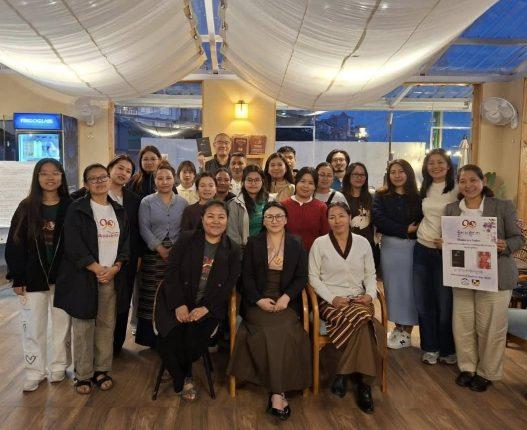
On 8th March, in celebration of International Women’s Day, a collective reading and discussion program was organised by Tibetan Women Empowerment in collaboration with the Tibetan Centre for Human Rights and Democracy. The event was attended by the Tibetan Youth Congress Organisation’s Secretary, Tsamchoe, and English researcher Tenzin Pema.
The session centred on women’s voices and offered a reflective exploration of gender representation in daily life. Participants read selected chapters from Invisible Women by Caroline Criado-Perez and the chapter “Khatak” from the book Zsurchik by Nyima Tso. These readings sparked a meaningful conversation about how women’s experiences are often overlooked or underrepresented within patriarchal systems.
The discussion of Invisible Women focused on chapters such as “Introduction: Default Male” and “Chp 8: One Size Fits Men”, highlighting how many aspects of the modern world are designed around male norms. From language and research data to gadgets, public infrastructure, and digital algorithms, the male experience is frequently treated as the universal standard. This invisible bias often goes unnoticed, yet it significantly shapes women’s safety, participation, and representation in daily life.
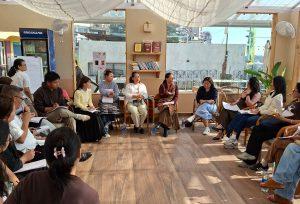
In examining “khatak” from Zsurchik by Nyima Tso, participants explored the experiences of women in Tibetan society. The narrative shows how the protagonist was able to express herself and reflect on her life through a relationship with a husband of a different nationality, demonstrating how her voice and agency found space in otherwise restrictive circumstances. The discussion also noted the encouraging progress of Tibetan women today, who increasingly have access to education and opportunities.
Participants spoke about ongoing efforts to challenge long-standing perceptions of women’s roles and capabilities. There is a growing community awareness of the importance of recognising women’s voices, supporting equal participation, and questioning outdated gender assumptions.
Overall, the program provided a thoughtful and engaging space for dialogue. The collective reading and discussion proved both worthwhile and impactful, encouraging participants to reflect on the subtle ways gender bias operates while recognising the progress made toward greater gender awareness and equality.
The program included a collective reading session followed by a discussion on women’s rights and empowerment. Participants actively shared their views, making the discussion engaging and meaningful. The event was conducted smoothly and successfully commemorated International Women’s Day while promoting awareness and dialogue on gender equality and women’s empowerment.